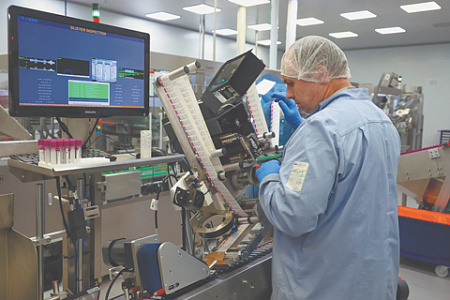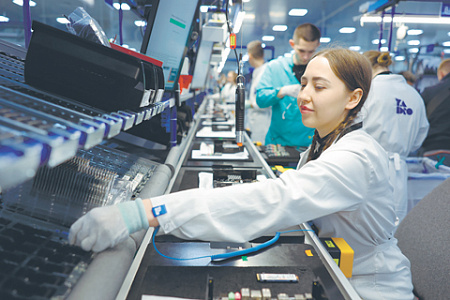
PJSC Sberbank (Russia's largest bank), the Eurasian Economic Commission (EEC — the regulatory body of the EAEU), and NPO Voyage (part of the Key Systems and Components Group) have signed an agreement on the construction of a new complex in Tver for the production of components for high-speed trains. The project's uniqueness lies in the complete import independence of production and the use of a special support mechanism within the Eurasian Economic Union: the EEC subsidizes the lending rate to develop industrial cooperation.
The total cost of the initiative exceeds 1.9 billion rubles. The financing will ensure the construction of a production building with an area of 12,000 square meters and the purchase of equipment. The enterprise will produce a wide range of interior solutions for railcars: cladding panels, sanitary complexes, water treatment systems, luggage racks, and fire partitions. The products are intended for Russian high-speed electric trains, specifically for the Moscow — St. Petersburg mainline, the launch of which is scheduled for 2028.
Project implementation is calculated for five years, with the start of production scheduled for 2028. By 2030, plans call for the creation of about 300 jobs. Alexander Vedyakhin, First Deputy Chairman of the Executive Board of Sberbank, noted the importance of local production for fulfilling state tasks. Taras Spivak, CEO of GC KSC, emphasized that the cooperation will strengthen the technological sovereignty of railway engineering in both Russia and the EAEU as a whole.