
The need to ensure security is increasingly clashing with the drive to digitalise the economy. Against a backdrop of mobile internet restrictions, throttled social media and disruptions to everyday services, official calls to boost the digital maturity of regions carry a note of bitter irony. For many city residents, more practical advice has taken precedence: arrange meetings in advance, carry cash and download essential information directly to your phone. Businesses, meanwhile, are paying the price for the uncertainty. Government agencies are fielding requests to expand the Ministry of Digital Development’s ‘whitelist’. Yet the list itself, whose full version has yet to be officially published, is fuelling disputes, particularly over the risk of unfair competition.
One of the stated goals of Russia’s digital transformation is to reduce digital inequality across the country. According to the Ministry of Digital Development, around 20 regions have already reached a high level of digitalisation. The ministry says it is working to bring regional digital maturity indicators into closer alignment. Standardised cloud-based solutions, deployed to the regions from the federal centre, are being promoted as an effective tool to achieve this.
‘We expect all regions to reach at least the minimum required level,’ said Deputy Digital Development Minister Grigory Borisenko. ‘At that point, we can say they are effectively beginning the transition to data-driven governance.’
In practice, however, the gap between digital maturity and digital decline can be alarmingly narrow. There is little doubt that the growing restrictions on internet services faced by Russians (now extending to the capital in the form of targeted, temporary shutdowns) are being introduced in the name of security.
This was confirmed by Kremlin spokesman Dmitry Peskov, who said all shutdowns and communication restrictions are being carried out in strict accordance with the law.
‘As for the problems this creates for business, that is, of course, an issue that requires further analysis,’ Peskov added. ‘In various contexts, the question arises of adding certain resources to the ‘whitelists’.
The Ministry of Digital Development’s ‘whitelist’ comprises digital platforms and services that, under government plans, are expected to continue operating without interruption during mobile internet shutdowns imposed for security reasons.
However, the list itself has so far done little to provide clarity, instead fuelling disputes and confusion. The issue is compounded by the fact that a full, official version has yet to be published by the government. For now, it is media outlets and reference websites that are tracking and consolidating the various additions to the original list.
According to updates from the Ministry of Digital Development, the list already includes ‘the most popular online platforms’, as well as ‘socially significant services in a number of regions, including healthcare, education and public transport.’
The list is being compiled on the basis of proposals from federal and regional authorities, in coordination with security agencies. “It is not possible to add a resource to the list by any other means. A key requirement for inclusion is that all computing infrastructure used must be located within Russia,” the ministry said.
In practice, this means the ‘whitelist’ excludes not only the websites of smaller local providers, effectively putting small businesses at a further disadvantage in competing with larger players, but also many everyday digital services used by the public. Even some of the country’s largest banks are not included.
Calls to expand the list are growing. Last year, for instance, proposals were made to include services that monitor glucose levels for diabetes patients. Following this, President Vladimir Putin instructed the government, together with the FSB, to take such internet services into account.
Insurers have also signalled their intention this year to be included on the whitelist. The All-Russian Union of Insurers has sent a letter to the Finance Ministry seeking support for the initiative, with a particular focus on compulsory motor third party liability insurance.
‘All insurers providing compulsory motor third party liability insurance are required to offer policyholders the option to submit claims electronically. The uninterrupted operation of information systems, online platforms and mobile applications used by market participants is both in demand and critically important,’ the union said.
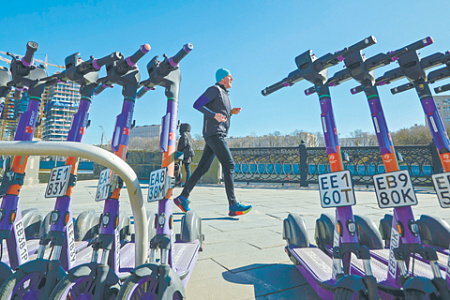
Lawmakers have also joined the debate. Temporary communication shutdowns in cities should not disrupt the operation of kicksharing services, meaning short term e-scooter rentals, or car sharing services, according to Andrei Svintsov, deputy chairman of the State Duma Committee on Information Policy.
Organisations across sectors are beginning to issue guidance for citizens in the event of further communication outages. Museums and theatres, for example, are advising visitors to download their electronic tickets to their phones in advance. Earlier this week, the DOM.RF website published recommendations in its advisory section on how to prepare for potential restrictions: ‘Withdraw cash. Download offline maps to your phone. Use Wi-Fi in public places. Try to leave the affected area. Arrange a meeting point with relatives in advance. Check whether others are also experiencing communication problems. Wait for the signal to be restored and do not panic.’
When there is a genuine threat to public safety or critical infrastructure, inconveniences such as being unable to rent a scooter or pay for takeaway coffee are, in principle, of little consequence.
The issue appears to lie elsewhere. It is evident, for example, in attempts by government agencies to reconcile two competing narratives within official rhetoric. On the one hand, they point to a bright digital future. On the other, they suspend services that until recently were presented as key achievements of digitalisation.
It should be noted that the current restrictions apply specifically to mobile internet and do not affect fixed line connections. However, media reports have already emerged about localised experiments involving the throttling of fixed internet for subscribers who significantly exceed their data usage. The justification in such cases is framed as purely economic, with references to excessive consumption by legal entities using the internet for commercial purposes.
In this new reality, economic uncertainty is increasingly being matched by digital uncertainty. It is no longer simply a question of lifestyle or everyday convenience for urban residents, but of the resilience of the infrastructure on which large parts of the economy and social life depend.
Another issue, it would seem, is that the digitalisation drive launched in the country, at times effectively imposed on citizens and businesses from above through the digitisation of databases and document flows, cannot easily be reversed. Its logical continuation was expected to include the digital rouble and, potentially, an electronic passport. Any rollback would risk destabilising the entire system of relations between the state, business and society.
‘The flip side of the ‘sovereignisation’ of the internet is the fragmentation of the digital space. A key consequence is not so much a slowdown as a loss of predictability,’ Anastasia Medvedeva, a researcher at the Artificial Intelligence Laboratory at Plekhanov Russian University of Economics, told Nezavisimaya Gazeta. ‘Overall, digitalisation in the country will not come to a halt,’ said Viktor Sizov, co-founder of operator versta.io. “But it will become ‘closed’. Instead of a unified environment, separate ecosystems with limited compatibility will emerge.’
According to Sizov, the effectiveness of the digital economy depends ‘not on control, but on connectivity’. Any reduction in service availability immediately drives up transaction costs. ‘Businesses start duplicating processes, introducing manual operations and losing speed in decision-making. In logistics, for example, this has a direct impact on costs, with delivery times and prices rising,’ he said.
There is another dimension to the issue. ‘For local companies and suppliers whose websites or applications are not included in the ‘whitelists’, this effectively means exclusion from the state’s economic space,’ Medvedeva warned.
Companies integrated into global logistics and production chains, including those involving the Internet of Things and smart manufacturing, will also need to adapt.
Not all experts, however, share the same view. ‘Protectionism is not the same as degradation,’ said Alexander Tunik, head of product at Runet Rating. ‘There may be temporary difficulties in certain sectors, for example for bloggers or marketing agencies. But this does not mean the entire digital infrastructure will be affected.’ This is particularly relevant given that the current restrictions are being presented as a temporary measure.
Original: NG/