The government has approved a three-year plan for the development of technologies based on nature.
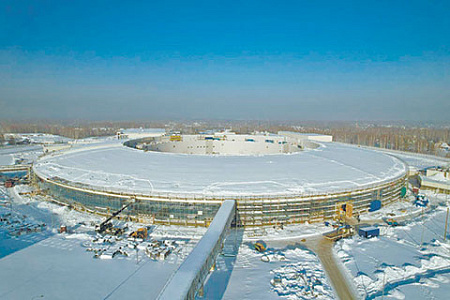
To create breakthrough technologies, Russia intends to pursue the construction of major scientific centres. Photo from the SKIF Telegram channel
At a briefing with the deputy prime ministers on Monday, Russian Prime Minister Mikhail Mishustin approved an action plan to develop biotechnology between 2026 and 2028. The three-year plan places an emphasis on constructing scientific infrastructure and training personnel for biotechnology. Researchers see difficulties in funding biotech projects, noting that it could take decades to see practical returns. Experts suggest that the leaders of traditional industries and major banks take on the role of providing venture capital.
As the head of the cabinet reported at the meeting, the government has already begun preparing a regulatory framework covering the development of biotechnology in the country. As Mishustin noted, ‘the task is complex and massive in scale, and vitally, a scientific base is crucial to carrying it out, and we have that expertise.’
The Prime Minister explained that ‘technological development and digitalisation processes are opening up additional opportunities in virtually all sectors of the economy and social sphere, but their use also creates a serious burden on the environment and leads to more intensive consumption of natural resources.’ ‘Therefore, breakthrough solutions are also needed to help restore the balance between the bio- and techno- spheres, as well as strengthen the health of the nation,’ he added. Biotechnology, in his opinion, represents just such a field.
According to Russian Deputy Prime Minister Dmitry Chernyshenko, the approved three-year plan for the development of nature-based technologies has close affinity with the national project ‘Technological Support for the Bio-economy.’
The plan itself covers several aims. The first is research and development. ‘The Kurchatov Institute has been designated as the leading scientific organisation here. ‘It will monitor and evaluate the results of the existing and newly established scientific centres,’ Chernyshenko explained.
Priority areas for research include energy saving, energy consumption technologies and the creation of new biosimilar materials.
The second aim of the plan is the creation of scientific infrastructure. ‘To accelerate the creation of breakthrough solutions, we will continue to develop mega-science infrastructure. This year, the Siberian Ring Photon Source in the Novosibirsk Region will reach its design capacity,’ the Deputy Prime Minister announced on Monday. Six other mega-science installations, he said, are being created under the Federal Scientific and Technical Programme for the Development of Synchrotron and Neutron Research. For example, this is the PIK reactor in the Leningrad region and the RIF synchrotron on Russky Island, the official clarified
The approved plan also includes the creation of a number of research centres that will specialise in nuclear medicine and hadron therapy, the testing of marine technology and underwater robotic systems, and the development of next-generation nuclear energy technologies
The third area is training personnel for the bio-economy. ‘Today, we have five leading engineering schools training qualified personnel specifically for the bio-economy, and nine universities are implementing projects under the Priority 2030 programme,’ says Chernyshenko. Furthermore, staffing the biotechnology sector involves developing new educational programmes for students and schoolchildren, improving the qualifications of teaching staff, and setting up internships for young researchers
In total, over 350 scientific organisations, more than 150 technology and engineering centres, and over 200 industrial enterprises are currently engaged in scientific research and development in this field in Russia.
As a reminder, the project Technological Support for the Bio-economy was approved at the end of last year. It plans to increase the level of technological independence for bio-economic products to 40% by 2030; increase the volume of bio-economic production by 96%; and increase the share of domestic biotech products in the consumption structure to 55%. The number of enterprises involved in training, professional retraining and advanced training of personnel in the bio-economy field should also increase
The national project includes three federal projects: Setting up the Production and Sales Promotion of Bio-economic Products; Scientific and Technological Support for the Development of the Bio-economy; and Analytical, Methodological, and Personnel Support for the Bio-economy
The Ministry of Industry and Trade previously noted that the national project would cover 36 areas. They are divided into four blocks: microorganisms, cell cultures and their derivatives; the products of microbial synthesis; products from processing plant and animal raw materials, as well as the means of production.
The funding volumes for the breakthrough national project are rather modest. According to the explanatory note to the draft federal budget for 2026–2028, RUB 754 million are planned for 2026, RUB 2.1 billion for 2027, and RUB 2.2 billion for 2028
Incidentally, before the national project was approved, the Ministry of Industry and Trade estimated the financial cost at RUB 1 trillion. Moreover, RUB 667 billion were financed from state funds and another RUB 535 billion were financed from non-state sources (see ‘NG’ dated March 16, 2025 ).
Russian officials estimate the current size of the Russian biotechnology market at RUB 440–450 billion. The potential market size by 2030 is estimated to be RUB 700 billion
At the same time, today, there are approximately 230 companies operating in the biotech sector in Russia, and Russia’s share of the global biotech market is 0.4–0.5%, said Anton Alikhanov, head of the Ministry of Industry and Trade, in February. According to the minister, Russian companies currently don’t have enough of a share: “To put it mildly, we have room for import substitution in terms of vitamins and, generally, in all areas.”
According to the experts, Russia has the capacity to develop its bio-economy: an extensive raw material base (agricultural crops, forest and water resources, secondary raw materials, etc.). However, nurturing this field, especially regarding entry to foreign markets, will be done in a highly competitive environment.
According to various estimates, the global bio-economy market ranges from USD 2 trillion to USD 4 trillion, with the potential to grow to USD 30 trillion by 2050. The largest share of this market today is held by the United States (38%), Europe (29%, thanks to the UK, Switzerland, Germany, Sweden and Denmark), and the Asia-Pacific region (24% counting Japan, China, South Korea, Australia and India).
At the same time, China has announced plans to take a leading position in the global biotechnology sector within the next 10 years, displacing the United States. In particular, as part of China’s 14th Five-Year Plan, covering 2021–2025, has set the goal of growing the volume of the Chinese bio-economy to USD 3.2 trillion by 2025
And this year, China has announced its intention to capture a quarter of the global biotechnology market by the end of this decade, i which products are produced by living microorganisms, rather than people or machines. ‘By 2030, the market size of China’s biotechnology-based manufacturing industry will grow to CNY 1.8 trillion (over USD 250 billion), which will account for almost a quarter of the global market. This means that China will become one of the key global powers in this area,” Xinhua reported (see ‘NG’ dated February 18, 2026 ).
The implementation of Russia’s bio-economic national project will begin in January 2026, the Minister of Industry and Trade, Anton Alikhanov has promised. For now, however, we are still very far from implementation in the usual sense
A joint report by the All-Russian Public Opinion Research Centre (VCIOM) and the Roscongress Foundation, dedicated to the development of the bio-economy in the Russian Federation, highlighted the difficulties that arise in the transition from laboratory research to full-scale industrial production. ‘Most promising research projects get stuck in the proverbial ‘valley of death’ that occurs during the scaling and industrial implementation phase,’ the report concluded. Experts agree that the lack of effective communication between the scientific community and business will hinder the development of the industry.
Another equally important problem, according to the experts, is a lack of specialised prototyping centres and test production sites necessary for testing and improving the methodologies before full-scale implementation
They also see difficulties in attracting funds to finance such projects. ‘The biotechnology sector is highly capital-intensive and carries a significant amount of risk, with the average return on investment stretching five to ten years, which is not what most private investors want to hear. There aren’t many such forward-looking industrial partners in the Russian market generally, let alone in specific niches of the bio-economy,’ the researchers emphasise, noting that Russia’s access to international financial markets is also limited
Other barriers to the development of the bio-economy include limited venture capital opportunities in Russia and the high key interest rate of the Central Bank, which also makes borrowing difficult
Incidentally, by the end of 2025, the volume of venture investments in Russia decreased by 18%, to USD 146 million, according to data from Venture Guide. Of this amount, less than USD 10 million was allocated to agricultural technologies. Meanwhile, private funds have increased their investment volume by 70%, and private investors by 28%. And the volume of government funding has decreased by 8.5%.
Researchers from the Roscongress Foundation propose that leaders of traditional industries (those not related to biotech) and major banks take on the role of providing venture capital to finance biotech projects.
At the end of February this year, it was reported that the Russian Ministry of Industry and Trade had agreed with other government agencies on a draft roadmap for developing regulations for the bio-economy. This roadmap, among other things, includes the development of tax incentives and measures to reduce the financial burden on companies in the industry
Bio-economics isn’t just biology and economics; it’s a whole system of scientific and technical fields and the connections between them, notes Alexandra Avdonina, associate professor at the Presidential Academy. In her opinion, such interdisciplinarity, on the one hand, allows Russia to set very ambitious goals and expect breakthroughs, but, on the other hand, it is precisely this that gives rise to a complex set of difficulties for hte regulatory frameworks, financing, and training of personnel for the bio-economy.