The Gas Exporting Countries Forum (GECF) opens in Moscow with Russia proposing the establishment of an international Gas Bank to support the development of gas infrastructure, including in African countries. The proposal was put forward at a preliminary ministerial meeting. Major gas producers such as the United States, Norway and China are absent from the list of participants. Iranian President Masoud Pezeshkian has arrived for talks with other national leaders. A meeting between the Russian and Iranian presidents is expected on Tuesday, October 27.

| Main gas supply routes to the EU |
| Gas interconnectors with the United Kingdom |
| Change in supplies |
| NORWAY |
| DENMARK |
| IRELAND |
| UNITED KINGDOM |
| NETHERLANDS |
| GERMANY |
| POLAND |
| BELGIUM |
| FRANCE |
| RUSSIA |
| BULGARIA |
| AZERBAIJAN |
| TURKEY |
| GREECE |
| ALGERIA |
| SPAIN |
| ITALY |
| LIBYA |
Changes in pipeline natural gas imports into Europe by supply route over the first nine months of 2026, compared with the same period last year.
Source: Secretariat of the Gas Exporting Countries Forum (GECF)
A ministerial meeting of the Gas Exporting Countries Forum was held in Moscow on October 26, with the GECF summit scheduled for Tuesday, October 27. Participants are discussing the creation of a bank to support gas projects in member countries
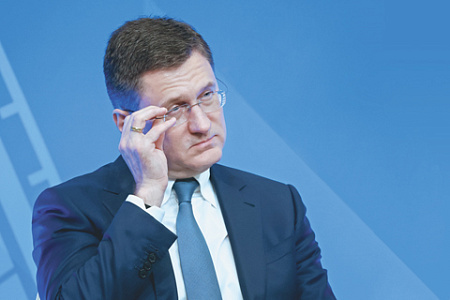
‘We are advancing the initiative to establish a Gas Bank,’ Russian Energy Minister Sergei Tsivilev said. ‘Such an institution would provide a source of long-term financing for the development of gas infrastructure in Africa and other continents,’ he explained. ‘The Gas Bank could become a driver of the global energy market, offering countries not only financial products but also advisory support and business solutions from the market’s leading players,’ Tsivilev said.
The Gas Exporting Countries Forum is an international intergovernmental organisation. The agreement governing its operation entered into force on September 30, 2009. Its full members are Algeria, Bolivia, Egypt, Equatorial Guinea, Iran, Libya, Nigeria, Qatar, Russia, Trinidad and Tobago, the United Arab Emirates and Venezuela. Russia has been a full member since 2009. Since 2011, summits of the heads of state and government of member countries have been held every two years.
Not all major gas-exporting countries participate in the GECF. The United States, the world’s largest producer and exporter of natural gas, is not a member. Norway, currently the largest supplier of gas to European markets, is also absent from the forum.
According to GECF data, global gas production rose by 1.2% over the past year to 4.23 tn cubic metres, driven by increased output in North America, the Middle East and Africa. US production rose by 43 bln cubic metres, while China and Canada recorded increases of 12 bln and 8 bln cubic metres respectively. GECF member countries remained a central pillar of global supply, accounting for 38% of total production
Collectively, GECF members hold around 70% of the world’s proven natural gas reserves and account for 42% of global gas exports. Their share of global liquefied natural gas (LNG) exports is estimated at approximately 47%.
Investment in oil and gas production reached USD 620 bln, a slight decline compared with the same period a year earlier. Development accounted for 89% of total investment, while the remaining 11% went towards exploration for new deposits.
Global gas trade grew by 3% last year to 1.20 tn cubic metres, largely because a sharp rise in LNG prices offset a modest decline in pipeline gas supplies. International gas trade volumes approached the record levels seen in 2021. The ratio of global imports to consumption rose to 28.5%, the highest level in three years. This reflects an easing of market conditions and wider fuel availability around the world. In Europe, total gas imports increased by 6% to 382 bln cubic metres, while imports into Asia fell by 1% to 463 bln cubic metres. Global LNG trade grew by 6.5% to a record 437 mln tonnes in 2025, marking the largest annual increase since 2019.
Russian President Vladimir Putin is scheduled to hold several bilateral meetings on Tuesday on the sidelines of the GECF and Russia-Africa summits, Kremlin spokesman Dmitry Peskov said
‘One of the main outcomes of the Gas Exporting Countries Forum will be the adoption of the Moscow Declaration, the draft of which was agreed today. The declaration is based on three principles: energy justice, technological neutrality, and equal, non-discriminatory access to energy resources and technology,’ Russian Energy Minister Sergei Tsivilev said. He noted that the Moscow Gas Declaration would establish not only general principles but also specific areas for joint action. ‘These include developing new markets, including in Africa and other developing regions; establishing long-term financing mechanisms for infrastructure projects; exchanging technology; and deploying digital solutions, including artificial intelligence,’ the minister explained. ‘Our shared task is to create the conditions for building long-term, mutually beneficial relationships. This requires predictable market rules, long-term contracts and a fair distribution of risks,’ Tsivilev said.
Despite successive global crises and changing approaches to supply security, global demand for natural gas will continue to grow, forcing gas companies to make investments more selectively and focus strategically on the resilience of supply chains, said GECF Secretary-General Philip Mshelbila. ‘Our forecast indicates that natural gas demand will grow strongly over the next 30 years. We estimate an increase of 31% over that period, with gas rising from 23% to 26% of the energy mix. Excluding renewables, gas will have the highest growth rate,’ Mshelbila said. According to him, demand for natural gas is underpinned by the fact that it is cleaner than other hydrocarbons and is generally readily available. Gas is also an important means of supporting the energy transition and mitigating the effects of climate change
ORIGINAL: NG/Russia Proposes Establishing an International Gas Bank