On the initiative of the energy holding En+ (founded by industrialist Oleg Deripaska), the report "Baikal. Energy of Life" was prepared and presented. It is the first document to systematically unite 62 corporate projects in the sphere of sustainable development within the Baikal natural territory. The report collects cases from such major companies as En+, RUSAL, Sber, VEB.RF, and RZD (Russian Railways), covering scientific partnerships, biodiversity conservation, and the circular economy. Irina Bakhtina, Director of Sustainable Development at RUSAL, noted that the report allows for the assessment of business contributions not as charity, but through the prism of national development goals. Alexandra Gundobina, Head of the Strategic Partnerships Department at En+, emphasized the historical continuity of the research, mentioning the "Point No. 1" monitoring project launched in 1945 and modern ecosystem monitoring programs.
The document has received support from UN structures and is viewed as a tool for Russia's international positioning. Elena Sharoykina, Chair of the Russian National Committee for the UN Decade on Ecosystem Restoration, announced work on the "Baikal Dossier," which will present the contribution of business and the state to the restoration of the region's nature at a global level. Vladimir Moshkalo, the representative of the UN Environment Programme (UNEP) in Russia, called Baikal a zone of responsibility on a global scale. Vadim Petrov, Deputy Director of VNII Ecology, added that Russian corporate practices must be translated into international scientific language for inclusion in UN databases.
Business representatives disclosed details of their environmental strategies. Vyacheslav Zdor from RZD announced plans through 2030, which include phasing out coal boiler houses, reconstructing treatment facilities, and eliminating a phenol sludge pond in Ulan-Ude. Irina Korshunova, Senior Director for Sustainable Development at the "Vkusno – i tochka" chain (successor to McDonald's in the Russian Federation), spoke about the recycling of frying oil and coffee grounds, as well as the #MyEcoDay (#МойЭкоДень) volunteer campaign. Entrepreneur Evgeniya Alekseeva presented the "Nitochka" project for creating a textile recycling center in Ulan-Ude. Andrey Sharonov, CEO of the National ESG Alliance, commented on the idea of creating a venture fund for green technologies, noting the necessity of scaling them beyond the region.
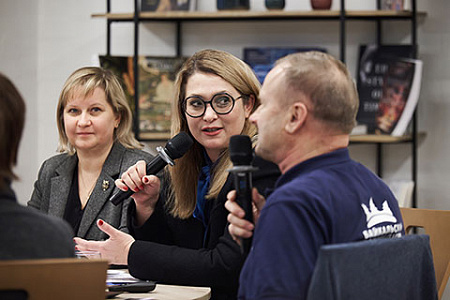
Georgy Arapov, Deputy Chairman of the State Duma Committee on Ecology, highly praised the report for treating Baikal as a "holistic organism" rather than a resource. He called for legislative changes that would allow a shift from punitive measures to encouraging business for contributions to sustainable development. Participants in the "Club of Friends of Baikal" meeting also discussed the development of tourism, including the "Ballet on Baikal" festival and the arrangement of eco-trails. The visual part of the report, intended to truthfully show the life of local communities, was prepared by documentary photographers, including Anton Klimov.