
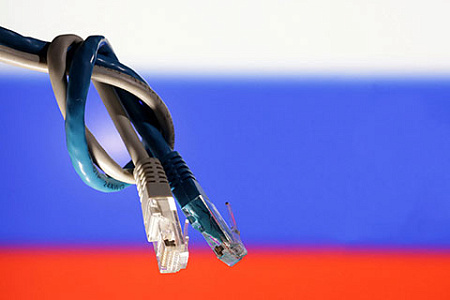
Mobile internet shutdowns in Russian cities, including the largest, are becoming routine. In St Petersburg, for example, connections were cut twice in March, with officials citing drone attacks, while a third outage went unexplained. In central Moscow, mobile internet was restored on March 24 after being restricted in parts of the city since the start of the month, according to local reports. The outlook remains uncertain. Operators across regions are sending SMS alerts to subscribers, citing ‘security measures’ and directing them to so-called white lists, restricted sets of websites and services that remain accessible even when broader access is curtailed.
When pressed about mobile internet disruptions, officials offer terse explanations, again citing security concerns and pointing to the relevant legislation. It is hard to see how this is meant to reassure the public. But reassurance may not be the aim. Citizens are meant to accept there is little to complain about: everything is lawful and done in their interests.
Recurring disruptions to mobile internet services are once again raising questions about priorities, not just social but civilisational. Security is a powerful argument and public concern for safety is real. But responsibility rests with agencies that, given their broad powers and the nature of Russia’s state system and law enforcement practices, tend to make their own work easier by curbing citizens’ freedoms and convenience wherever possible. Legislation governing communications restrictions, including recently adopted measures, reflects this approach. What constitutes a security risk is determined by authorised bodies, which are under no obligation to explain their decisions. Their directives are to be followed, in the name of the common good.
Those inclined to defend such arrangements, and quick to adapt to them, often invoke the past. There was a time, they argue, when neither mobile nor home internet existed. ‘We managed then, we’ll manage now, we’ll find something else to do.’ One can always dance or play in the snow. The argument may sound persuasive, but it quickly collapses into absurdity. In the past, people ate worse, received poorer medical care, lived shorter lives and died more often. Comforts were fewer, sometimes non-existent. Where, then, is the line, the point in our personal and collective experience beyond which we are no longer willing to retreat? At what stage do we say: this is something we are not prepared to give up?
Security is, of course, fundamental. But the progress of civilisation, of society and the economy, cannot be reduced to that foundation alone. Modern urban life is difficult to imagine without fast, reliable mobile internet. It underpins payments, keeps the service sector running and enables millions of interactions, business, family and social. It is a core driver of economic activity: without it, growth slows, companies incur losses and the state ultimately does as well. It is not possible to simply switch everything off and then promise to address the consequences later.
The pursuit of a more comfortable life has driven civilisation since its earliest stages. The desire to eat better, look better, stay healthier, learn more effectively and move more easily, along with countless other aspirations, is not a luxury but the norm. Security is part of civilisation, but it is not its limit. All the more so as life does not appear any safer than it did in the recent past, when many of today’s restrictions not only did not exist but were not even contemplated. Those introducing them now seem to assume that citizens will simply adapt, because they have no alternative.
At various points in history, freedoms have been curtailed in the name of security. But today we are witnessing a shift in the technological paradigm. Technology answers a fundamental question: how value is created, not what is produced. Against this backdrop, restrictions on internet access and mobile connectivity directly affect the country’s ability to keep pace with change, to compete in the platform economy and to avoid missing a critical phase in which new modes of production and new forms of labour are emerging.
For this reason, it is not in society’s interest to leave decisions on restricting core factors of production to the security services. In the later Stalin era, the country went through a similar cycle of bans, notably in genetics and cybernetics. The overriding argument was ideological security, as these fields were dismissed as manifestations of ‘idealism’. The so-called Weismannists-Morganists were duly suppressed, but the country fell behind for decades as a result.
The gap has yet to be fully closed.
For that reason, security agencies should not be given exclusive authority to restrict activity in the key technological domains that will shape Russia’s future.
ORIGINAL: NG/ Internet Curbs Risk Sidelining Russia in the Next Technological Era