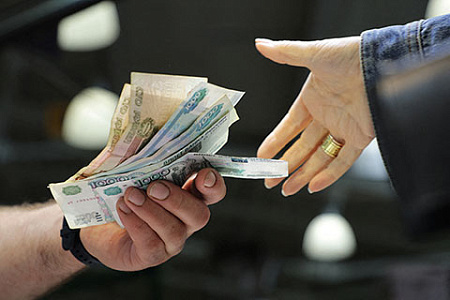
There is no public demand to reduce the number of wealthy individuals in Russia, according to the Institute of Sociology of the Russian Academy of Sciences. Instead, the focus has shifted towards creating a ‘zone of stable mass prosperity’, with society prioritising the narrowing of gaps in opportunity rather than outcomes. The logic is straightforward: if access to education, healthcare and social mobility is equal, and if everyone is equal before the law, then differences in income or status are perceived as a matter of personal responsibility.
Where opportunities are constrained, however, inequality is viewed as the product of opaque rules.
Social inequality in Russia continued to increase last year, though at a slower pace than in 2023–2024, according to a review by the Gaidar Institute for Economic Policy.
While this may appear positive at first glance, the slowdown largely reflects weaker economic activity.
‘In January–September 2025, income inequality indicators in Russia point to stabilisation after rising in 2023–2024, which may be linked to a slowdown in economic activity,’ said Gaidar Institute experts Tatiana Ivakhnenko and Andrei Polbin.
Russia’s Gini coefficient stood at 0.41 in 2024 and edged up to 0.411 in January–September 2025, a negligible increase.
The Gini index measures income concentration: it is zero when incomes are evenly distributed and one when all income is held by a single individual. The higher the reading, the more pronounced the inequality.
Decile ratio trend in Russia. The indicator shows how many times the average income of the top 10% exceeds that of the bottom 10%. Source: Gaidar Institute
Another key measure of inequality is the decile ratio, which compares the average incomes of the richest and poorest 10 % of the population. The higher the ratio, the wider the income gap.
Preliminary data show the ratio rose to 15.8 in 2025 from 15.5 a year earlier.
The authors attribute the increase in part to faster income growth among higher earners.
Uneven wage growth across sectors may also have contributed. In addition, elevated interest rates are likely to have boosted returns on deposits and other financial instruments for households with savings.
The issue of social inequality was one of the key themes at the recent Grushin Sociological Conference in Moscow (see NG dated March 29, 2026). Experts who spoke at the conference discussed the changing perceptions of inequality and fairness among Russians.
‘There is no public demand to reduce the number of wealthy individuals. Instead, there is a call to create a zone of stable mass prosperity,’ said Tatiana Gorina, a researcher at the Russian Academy of Sciences’ Institute of Sociology, summarising the conference findings.
‘This reflects a preference for a society with a broad middle class and limited extremes of wealth and poverty,’ according to a presentation by Svetlana Mareeva of the same institute, published on the conference website.
In public perception, social justice is not about eliminating inequality altogether, but about narrowing disparities in opportunity.
Mareeva’s data show that a clear majority of respondents, around 61 %, define social justice primarily as equality before the law.
More than half, 51 %, also point to equal access to essential healthcare and quality education, with respondents able to select multiple answers.
Around 41 % see fairness as ensuring individuals can fulfil their potential, and that children from different income backgrounds have equal opportunities.
Nearly a third, 32 %, associate fairness with broadly similar living standards and the absence of both ‘very rich’ and ‘very poor’.
Around 30 % say a person’s position in society should depend on their work. A further 21 % link social justice to equal access to good jobs.
Taken together, the responses point to a clear logic. Where access to education, healthcare and social mobility is equal, and all are equal before the law, differences in income or status are accepted with a degree of understanding, as a matter of individual responsibility for those who had opportunities but, for whatever reason, did not take them.
Where equality of opportunity is lacking, however, socio-economic inequality is seen as the direct result either of barriers artificially imposed on the majority or of privileges granted exclusively to a select elite.