Russia’s migration policy is marked by contradictions. The economy faces labour shortages, public sentiment is increasingly hostile to migrants and security agencies warn of risks. The core issue is an inconsistent oscillation between liberalisation and tightening, creating legal uncertainty, fostering corruption and sustaining an illegal working.Russia’s migration policy is marked by contradictions. The economy faces labour shortages, public sentiment is increasingly hostile to migrants and security agencies warn of risks. The core issue is an inconsistent oscillation between liberalisation and tightening, creating legal uncertainty, fostering corruption and sustaining an illegal working. At the international conference ‘Migration: Opportunities for Russia’s Socio-Economic Development and Security Challenges’, officials were urged to adopt a more coherent approach to attracting and integrating migrant workers.
The conference was organised in Moscow by the Institute of China and Contemporary Asia of the Russian Academy of Sciences. It brought together more than 60 experts, including government officials, CIS diplomats, representatives of international organisations, academics and social activists.
The main conclusion was that rhetoric framing migration as a Russia’s security threat is excessive. Participants also noted that attracting workers from far abroad countries, rather than neighbouring states, could serve only as a niche solution for certain occupations and would not address the broader shortage of basic labour.
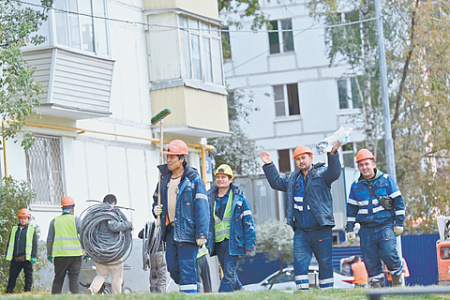
In other words, the labour market’s primary demand remains for migrant workers from neighbouring CIS countries, above all Central Asia. Participants stressed the need to build an effective system for their recruitment, employment and integration, free from excessive bureaucracy and bias.
Many speakers noted, however, that instead of pursuing a comprehensive solution, the authorities are relying on tighter controls and minor reforms. As a result, current migration policy has been likened to ‘patching a leaky bag’.
The discussion identified several priority areas, including digitalising migrant registration, better structuring labour flows, expanding adaptation and repatriation programmes and reducing bureaucratic barriers.
Participants gave high marks to mechanisms used within the EAEU’s single labour market, as well as to the role of civil society and religious organisations in supporting migrants. Concerns about cultural incompatibility with the local population, some experts argued, are not borne out where integration is handled systematically.
To move migration policy out of its current impasse, they said, Russia needs a long-term strategy for attracting migrant workers that takes regional specifics into account, along with effective infrastructure for adaptation and integration and greater transparency and predictability of migration flows.
‘Only a systemic approach that combines control with support will allow Russia to harness the potential of migration for socio-economic development while maintaining public security and stability,’ conference participants concluded.
Kirill Babaev, Director of the Institute of China and Contemporary Asia, said policymakers need high-quality analytical support to adjust migration policy to rapidly changing conditions. Erlan Shamishev, Minister Counselor of Kazakhstan in Moscow, cited cases such as migrants having their passports confiscated under the pretext of registration, as well as instances where Kazakh students were added en masse to a register of monitored individuals due to universities failing to submit documents to the Ministry of Internal Affairs on time or even because of technical glitches.
Vladimir Mukomel, Head of the Centre for the Study of Interethnic Relations, Institute of Sociology of Russian Academy of Science, pointed to a shift in migration policy. The guiding principle of the new approach, he said, is that ‘foreigners should not remain in the country permanently’. At the same time, he noted that the official migration policy framework continues to present Russia as open to foreigners who do not intend to integrate, viewing migration as an auxiliary tool for addressing labour shortages in the domestic economy.
Federal State Statistics Service (Rosstat) is already projecting a sharp decline in the labour force over the next five years, with migration seen as the only way to offset natural population decline through to 2045, Mukomel said. At the same time, he noted that the authorities plan in the near term to restrict entry for the family members of migrant workers, introduce organised recruitment schemes and tighten employer liability for breaches of migration law.
Such an approach raises concerns, he argued, not least because it runs counter to the basic principles of managing socio-economic processes. He also described as ‘tense’ the situation around restrictions on migrant children’s access to education and measures to shorten the permitted stay of their parents.
More than 50 regions have already restricted migrant employment in retail, transport and services, sectors where migrants most often interact with the public. In effect, integration policy has been actually rolled back, while the main curbs target migrants from Central Asia, particularly Uzbekistan and Tajikistan.
Olga Chudinovskikh, Head of the Research Laboratory of Economics of Population and
Demography of the Lomonosov Moscow State University, said Russia continues to prioritise temporary migration, which far exceeds permanent settlement. In 2025, around 9 million foreigners were registered for temporary stay, while 5 million were in the country for work and held either temporary or permanent residence permits. A further 320,000 acquired Russian citizenship.
Under the previous migration policy framework for 2019–2025, about 3.3 million people obtained Russian citizenship through the Ministry of Internal Affairs, more than 1 million residence permits were issued and over 420,000 took part in the state resettlement programme.
She noted, however, that such data makes it difficult to determine who exactly is arriving, beyond a broad sense of countries of origin. There is also little clarity on the grounds on which foreigners are granted residence or citizenship, aside from those classified as compatriots.
Under the policy framework, priorities include both the resettlement of compatriots and attracting skilled professionals and investors. In practice, the picture diverges from these aims. In 2025, family reunification was the most common basis for acquiring Russian citizenship, accounting for 57 % of cases, while ‘human capital assets’, that is, in-demand specialists, made up just 0.5 % and participants in the state resettlement programme 11 %.
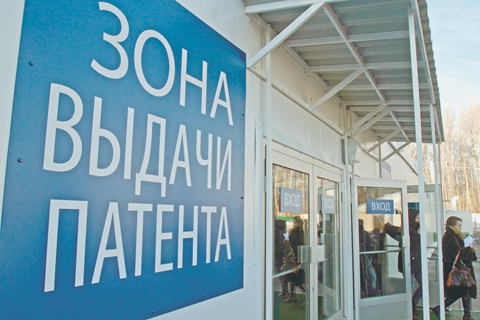
A similar pattern is seen in residence and temporary permits: 40 % relate to family reunification, 2.2 % to ethnocultural ties with Russia and 6.5 % to ‘human capital assets’.
Among CIS countries, Tajikistan ranks first by the share of citizenship granted on the basis of family reunification. Of the 42,500 Tajik nationals who obtained Russian citizenship in 2025, more than 90 % did so on these grounds. Armenia ranks second, while Georgia comes third in percentage terms, although only around 1,000 of its citizens became Russian nationals on all possible accounts. However, according to Ministry of Internal Affairs data presented to the conference organisers, the figures refer only to country of origin, without specifying applicants’ ethnic background.
Chudinovskikh also noted that drastic measures introduced this year are aimed at reshaping migration flows. Temporary residence permits for foreign spouses of Russian citizens may now be granted only after three years of marriage or if the couple has a child, while obtaining permanent residence or citizenship on these grounds would require signing an enlistment contract. This is likely to curb family-based migration.
The list of in-demand professions qualifying for residence permits has also been cut sevenfold. The expected outcome is a decline in overall migration, a shift in its geography and efforts to attract highly skilled specialists from ‘unfriendly’ countries seen as sharing ‘traditional values’, rather than relying on migrant workers from former Soviet republics.
As Alexander Brod, a member of the Presidential Council for Civil Society and Human Rights, told Nezavisimaya Gazeta, the conference highlighted a range of difficulties in implementing migration policy, spanning legislation, economy, politics and public sentiment. Chief among them are contradictions in migration laws and a constant oscillation between liberalisation and restrictions, which create confusion and fuel corruption.
There is also no clear strategy for attracting migrants. The authorities have yet to determine how many workers the country needs, which skills are in demand or how migration should support regional development. ‘The system for recruiting foreign workers is ineffective. There is no coherent framework for selection or training, and migration flows remain largely unstructured,’ he said.
He added that long-term and laborious procedures for obtaining work permits, registering arrivals and acquiring citizenship constrain legal migration, often pushing people into informal employment. Integration remains another challenge: many migrants struggle to adapt quickly, face language and cultural barriers and tend to live in separate communities or enclaves.
Among other issues, Brod highlighted stereotypes and prejudice against migrants, which lead to discrimination at work and in everyday life, difficulties for migrant children in schools and the social isolation of families. Social protection remains weak, with unclear entitlements to healthcare and pensions, while even migrant children are often left without medical insurance.
‘State regulation of migration processes is insufficient, and migration statistics are incomplete and unreliable. The authorities themselves do not always know how many people are arriving and leaving, where they come from or what they do. Ultimately, there is a gap between the stated goals of migration policy and how they are implemented in practice,’ Brod concluded.
In his remarks, he also noted that both Russia’s migration policy framework and national policy strategy stress the need to create conditions for migrant adaptation and integration, as well as to protect their rights and social security.
Yet a draft law on social and cultural adaptation has still not been adopted, held up by differences in approach and institutional and legal gaps. The previous migration policy framework for 2019–2025 set out only the objective of creating such conditions but offered no concrete mechanisms.
The problem is compounded by blurred lines of responsibility between federal, regional and local authorities, as well as weak coordination between agencies, including the Ministry of Internal Affairs, the Ministry of Science and Higher Education and the Federal Agency for Ethnic Affairs. Current legislation does not clearly define ‘social and cultural adaptation’ or ‘integration’ in relation to migrants, allowing different bodies to interpret these concepts in their own way.
Brod also noted that the Federal Agency for Ethnic Affairs has proposed setting up adaptation centres within state-funded institutions or autonomous non-profit organisations to provide information on social norms and teach Russian as a foreign language. In practice, however, a pilot project launched in 2025 in five regions has not been expanded in 2026.
Brod claims, that a dedicated section should be added to the Federal Law ‘About Legal Status of Foreign Citizens in the Russian Federation’ to set out the legal, organisational and economic framework for migrants’ social and cultural adaptation, including a clear definition of the concept. It should also clarify the powers of public authorities, define the role of employers and civil society and establish requirements for the infrastructure supporting migrant integration.
ORIGINAL:NG/Migration Policy Comes Under Fire from All Sides