According to expert forecasts, underinvestment will remain one of the main constraints on Russia’s economic growth through 2029. For industrial companies to begin investing again, several conditions must be met. First, there must be clarity and predictability in the macroeconomic environment, a requirement now cited by more than 70% of surveyed industrial companies. Second, costs associated with high equipment prices and elevated borrowing costs must fall, a concern raised by roughly every second company. Third, there must be an end to the special military operation, a condition considered relevant by at least one-third of industrial firms
Russian industrial companies have identified the main incentives that would encourage a recovery in investment activity. The findings come from a May survey conducted by the Institute of Economic Forecasting of the Russian Academy of Sciences (IEF RAS).
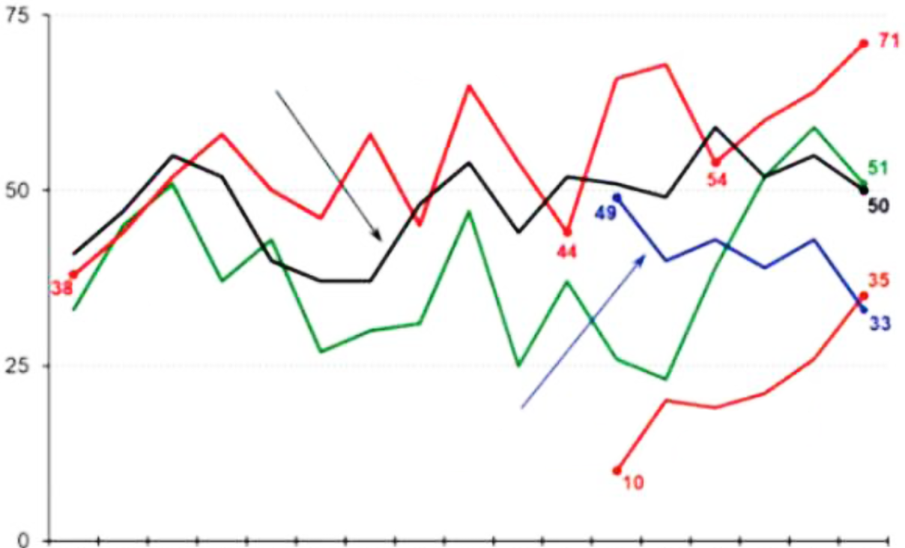
A major factor that would prompt industry to revise its investment strategy is ‘clarity and predictability of the macroeconomic situation’. In May, around 71% of surveyed industrial companies cited this requirement.
‘This is more than at any point in the entire 13-year history of our monitoring of industrial investment incentives,’ said Sergei Tsukhlo, an expert at the institute. (Previously, the surveys were conducted by the Gaidar Institute; now they are carried out by the IEF RAS.). ‘It is unlikely that clarity and predictability of the macroeconomic environment for companies will increase in 2026,’ he added.
Tsukhlo also recalled that immediately after the Covid crisis, in February 2022, only 44% of companies identified clarity and predictability as an investment priority.
But what exactly does macroeconomic clarity and predictability mean? According to Olga Belenkaya, head of macroeconomic analysis at Finam, businesses making investment decisions must assess future prospects and economic stability over a horizon of at least three to five years
The most important variables include expected economic growth and inflation, forecasts for the key rate, tax regulation and its predictability, export opportunities, the technological environment, including internet regulation, demand for products and competitiveness against imports
At present, however, macroeconomic predictability remains limited. Belenkaya attributes this both to global instability and to domestic factors, pointing in particular to repeated changes to the tax system in recent years despite official promises that tax rules would remain fixed until 2030
According to Nail Khairov of the Plekhanov Russian University of Economics, businesses care less about a one-off achievement of inflation targets than about the consistent delivery of official forecasts; less about a fixed exchange rate than about the absence of sharp currency swings; and less about the precise level of taxation than about avoiding unexpected changes in tax and regulatory policy.
At present, defence-related companies and major state contractors appear to have stronger incentives to invest than companies operating in civilian sectors.
As Khairov noted, this is not necessarily because the economics of their projects are more attractive, but because state contracts provide a degree of planning certainty that is lacking in open markets.
That said, growing problems with delayed payments, including by state customers, increasingly complicate that picture.
The survey conducted by IEF RAS provides a clear illustration of what businesses mean by clarity and predictability.
The second most important investment incentive cited by industry concerns prices: lower equipment costs and lower interest rates on loans. About half of surveyed companies identified each of these factors as important.
Notably, demand for such measures has eased somewhat in 2026. The strongest demand for lower borrowing costs was recorded in 2025, when 59% of surveyed companies highlighted the issue.
The third most frequently cited and arguably most revealing condition for restoring investment activity was the end of the special military operation.
In May, 35% of industrial companies identified this as an investment incentive. For comparison, only 10% mentioned the factor in surveys conducted in 2022
‘As government priorities have evolved during the special military operation, understanding of the negative impact of fiscal and monetary policy on the investment activity of producers not involved in fulfilling state orders has increased more than threefold,’ Tsukhlo said.
At the same time, sanctions appear to have become less important as a negative factor affecting industrial investment plans.
According to the latest quarterly forecast from the Institute of Economic Forecasting, current economic trends do not suggest a rapid recovery in investment activity.
While weak demand is the primary reason for investment stagnation in the private sector, government investment will remain constrained by budgetary limitations over the coming years
‘Investment is becoming one of the key factors restraining economic growth between 2026 and 2029,’ the institute’s economists warned. The institute forecasts a 1.2% decline in investment in 2026
Even that is relatively optimistic. The Centre for Macroeconomic Analysis and Short-Term Forecasting expects investment in fixed capital to fall by 2.2% to 2.6% in 2026, while the Ministry of Economic Development’s baseline forecast projects a decline of 1.5%.
ORIGINAL: NG/End of the Special Military Operation Becomes an Investment Factor