The latest phase of Russia’s downturn in 2026 is marked by selective wage cuts, layoffs, falling output and a shift by small businesses towards cash transactions. TheСentral Bank estimated in March that financial flows across sectors have shrunk by 8 %. Official data point to a sharp contraction in manufacturing. Mining is also showing signs of stress, with entire regions already affected. Wage arrears are rising rapidly across most sectors, although the total remains modest relative to the overall wage bill. A defining feature of the current downturn is the lack of a clear path to recovery and the risk it becomes prolonged.
Job cuts in Russian industry began several months ago. Now, reports of layoffs and shorter working weeks at manufacturing and metals companies are emerging almost weekly. Official employment data have yet to fully capture these trends, although business surveys suggest a clear majority of companies have already reduced headcount (see NG dated March 24, 2026).
Industrial companies continue to cut headcount, a trend that, according to businesses, dates back to July 2024. February and March 2026 saw the sharpest rise yet in the share of firms that have already implemented layoffs. The latest survey from the Institute of Economic Forecasting at the Russian Academy of Sciences (IEF RAS) shows the proportion of companies reducing staff has reached its worst level since the 2008–2009 global financial crisis.
A similar pattern is evident in hiring expectations. The balance of expected workforce changes fell to minus 17 percentage points in March 2026, also the lowest since the 2008–2009 crisis. Wage plans have deteriorated, with February and March data signalling that industry is once again abandoning pay rises.
Labour market strains are further underscored by a sharp increase in overdue wages. Rosstat said total wage arrears at the end of February rose by 8.3 % month on month among organisations outside the small business sector. Even so, the overall stock of unpaid wages remains below 1 % of the monthly wage bill, suggesting widespread protests are unlikely for now. This contrasts with the 1990s, when workers often endured months-long delays in pay. However, in some sectors the pace of deterioration is accelerating. In wholesale and retail trade, wage arrears more than doubled in February. Across extractive industries, monthly increases exceeded 25 %, while in the coal sector they rose by more than 50 %.
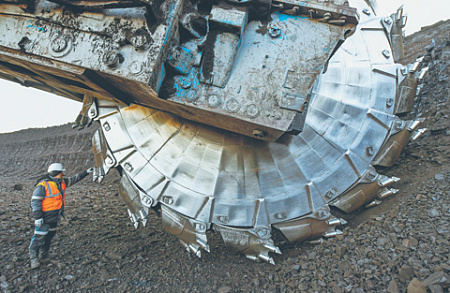
The surge in wage arrears in the coal sector underscores the depth of the crisis, particularly in the Kemerovo Region, where entire operations are being shut down.
BALANCES OF ACTUAL EMPLOYMENT CHANGES, SEASONALLY ADJUSTED, 2003–2026
Balance of positive and negative responses on employment trends at Russian industrial enterprises. Source: Institute of Economic Forecasting, Russian Academy of Sciences (RAS)
‘Among the companies that will not resume operations, some have exhausted their reserves, while others are closing due to the deteriorating economic environment. At the industry level, the numbers are relatively small, but for towns dependent on these employers, the impact is significant,’ – said Andrei Brizhak, the Kemerovo region’s coal industry minister.
Earlier, governor Ilya Seredyuk said eight mines would not reopen. In total, 33 companies are now in the ‘red zone’, with 17 having already suspended operations. Falling output, worsening finances and layoffs are triggering a knock-on effect, including on regional public finances.
Before the current downturn, coal producers accounted for around 40 % of the region’s budget revenues. That share has now fallen to 18 %. In 2025 alone, the Kuzbass budget lost RUB 36 billion in revenue, more than the entire budget of Kemerovo and roughly twice that of Kiselyovsk. Over two years, the shortfall has reached RUB 120 billion. As a result, the region was unable to fund a number of key projects in 2025.
Layoffs and shorter working weeks are becoming a regular feature of regional headlines. At the Chelyabinsk Electric Locomotive Repair Plant, management will shift part of the workforce to a four-day week from May, with formal redundancies set to follow in the summer. The Kazan Electromechanical Plant is also under pressure. While still operating, it has already cut nearly two-thirds of its staff, with headcount falling from 130 at the start of 2025 to around 40, according to local media. Earlier reports pointed to workforce optimisation and cuts at Russian Railways and AvtoVAZ. Downsizing at such large employers tends to ripple through supply chains, affecting dozens of contractors and suppliers.
Consumers and small businesses are adjusting to the worsening outlook. Depositors are withdrawing funds, while cash usage is rising. The Central Bank said cash in circulation increased by RUB 300 billion in March 2026. Officials partly attribute this to mobile internet disruptions, though concerns linked to efforts to formalise the economy are also a factor (see NG dated March 19, 2026).
The Central Bank has also highlighted the financial impact of the slowdown.
In March 2026, incoming payments processed through the Bank of Russia’s system were 8.1 % below the average level recorded in the fourth quarter of 2025. Overall inflows in the first quarter fell 5 % compared with the previous quarter’s average, the Central Bank said. In consumer-facing sectors, incoming payments declined by 6.4 % in March relative to fourth-quarter levels, with real estate transactions and retail accounting for most of the drop, according to Central Bank officials.