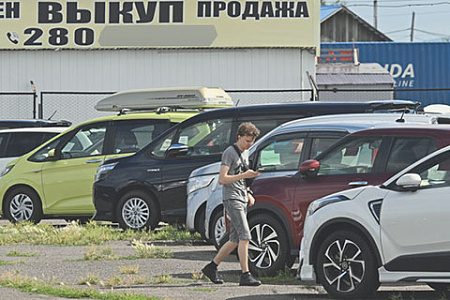

Growth in consumer demand in the middle of the year helped Russia’s economy overcome the downturn at the start of 2026. That support is now weakening. Consumer spending growth in Russia has fallen below the levels recorded in May and June. Household spending in June through August was almost 4% lower than in the previous three months. In September 2026, nominal weekly growth in consumer spending was weaker than in earlier months of the year
Russian economists have identified how the economy managed to emerge from the GDP downturn in the first quarter of 2026, after an 18-month period of slowing economic growth. Three key factors helped reverse the decline: stronger consumer demand, higher prices for Russian export goods and businesses rebuilding depleted inventories.
The recovery in consumer demand after the first quarter came amid falling deposit rates and a lower savings rate on households’ current labour income (see Nezavisimaya Gazeta, September 3, 2026). Economists at the Institute of Economic Forecasting of the Russian Academy of Sciences believe the increase in demand was also likely linked to growing financial anxiety among households, with higher current consumption becoming a response to those concerns.
However, the latest data from the SberIndex laboratory suggest that the consumption recovery in Russia may already have ended. The temporary increase in household spending is now behind us, with consumer activity beginning to move in the opposite direction.
Inflation- and seasonally-adjusted consumer spending in June through August 2026 fell by 3.7% compared with the previous three months, from March to May 2026, according to the laboratory’s calculations. The decline affected all major spending categories: food, non-food goods and services. Non-food goods made the largest contribution to the overall decline, accounting for 2.4%, followed by food products at 1.1%, services at 0.1% and catering at 0.1%.
In August 2026 compared with July, total consumer spending adjusted for inflation and seasonality increased by 0.2%. Non-food spending rose by 0.4%, catering expenditure increased by 0.5%, and spending on services grew by 0.5%. Food spending, however, declined by 0.3%.
The comparison of consumer spending is based on aggregated and de-identified transaction data from Sberbank customers, reflecting changes in Russia’s cashless consumer spending. The indicator measures the percentage change in consumer spending on goods and services compared with the same week a year earlier.
Consumer spending is divided into four main categories: food products, non-food goods, services and catering. Household spending data from the SberIndex laboratory becomes available significantly earlier than official figures from the Federal State Statistics Service (Rosstat).
Many economists expect support for the Russian economy from consumer demand to weaken. ‘Consumer demand will gradually be constrained by slower growth in real disposable household incomes. By the middle of 2026, the only significant factor behind income growth was higher wages among employees of large and medium-sized companies,’ the latest quarterly forecast from the Institute of Economic Forecasting of the Russian Academy of Sciences says. However, substantial wage growth remains concentrated mainly in sectors where relative pay levels are low. ‘There are grounds to believe that with moderate GDP growth of 1 to 1.5%, the trend of wages rising faster than the economy may fade,’ economists said.
The stabilisation of official inflation indicators is currently having little impact on weekly consumer spending trends.
Change in weekly consumer spending in Russia compared with the same week of the previous year, %. Source: SberIndex.
‘Recently, Russian inflation has displayed several contradictory behaviours, making it difficult even to determine whether it is genuinely declining or rising,’ according to the latest review by the Centre for Macroeconomic Analysis and Short-Term Forecasting (CMASF).
The ‘moment of truth’ for Russian inflation will come in the fourth quarter of 2026, according to Dmitry Belousov, head of a division at CMASF.
The final three months of the year will combine several important factors including seasonal increases in fruit and vegetable prices, a possible weakening of the rouble and the indexation of regulated housing and utility rates from October 1.
‘The combination of these factors will determine the final scale of inflation in the Russian economy this year. The current estimate for annual inflation is 6.5 to 6.8%, which broadly corresponds to the Bank of Russia’s forecast of 6 to 7% under all scenarios,’ CMASF experts said. The centre’s analysts no longer see the petrol crisis in Russia as having a critical impact on price growth. ‘The latest wave of fuel price increases is unusual. Petrol prices rose again by 2.3% over three weeks after falling by 1.1% in the previous three weeks, while diesel fuel has been declining quite rapidly, down 0.47% over three weeks and another 3% over the preceding three-week period,’ CMASF specialists noted.
Maintaining normal conditions in the diesel fuel market is most likely the result of targeted policy measures, as this is the segment where strong demand growth from agriculture is currently being observed,’ Belousov said. According to him, seasonal demand for petroleum products will begin to decline within a month. Household demand is believed to start falling in September, while demand from agriculture is expected to decrease from late October. These two factors alone will act as disinflationary forces.
ORIGINAL: NG/Consumer Demand Support for Russia’s Economy Is Already Weakening