
Women spend almost twice as much personal time as men on nearly all types of household work, according to Russian sociologists. The only exception is repair work, where women’s labour input is generally lower than men’s. The heavy burden on women in Russian households is an important demographic factor that is barely reflected in state birth-rate support programmes. Families receive maternity capital payments or mortgage write-offs only after a child is born, a step many already overburdened women are reluctant to take.
The distribution of household duties between partners is an important factor affecting reproductive behaviour and quality of life in modern families. The issue is particularly acute in Russia, where the population could decline by 5% by 2046 because of low birth rates, according to Natalya Voronina of the Institute of Sociology of the Russian Academy of Sciences. Russian women carry a heavier domestic workload than their husbands, a fact acknowledged by men themselves
If a woman is forced to handle all domestic responsibilities alone while also working full time, this disrupts work-life balance, reduces time available for rest and negatively affects her health. Under otherwise equal conditions, a woman overloaded at home and at work is therefore more likely to refuse to have another child. Yet it is the birth of second and third children that could halt Russia’s depopulation
Sociologists argue that unequal distribution of unpaid domestic labour is deeply rooted not only in Russia but in most modern societies. Across Europe, women still perform the majority of housework, and this imbalance persists even when women work longer hours and earn higher salaries than their male partners.
For most categories of domestic work, more than half of women say they ‘do all or almost all’ of the tasks. By contrast, only around 10% of husbands give the same answer. Men’s most common responses are that they ‘do half’ or ‘do about a quarter’
When asked how many hours they spend on domestic work, women with children report 23 hours a week, while men estimate their contribution at less than 11 hours
On average, women with and without children estimate their housework time at seven hours more per week than men do. Comparisons between objective and subjective measurements show that both men and women without children tend to underestimate their domestic workload. Women estimate they spend 2 hours and 51 minutes a day on household labour, while Rosstat data indicate the actual figure is 3 hours and 26 minutes.
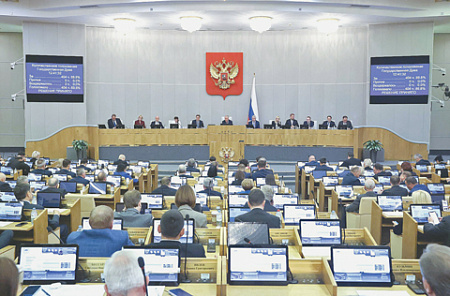
Many Russian lawmakers recognise the connection between women’s excessive workload and low birth rates. As a result, they sometimes propose unusual demographic measures. Members of the State Duma have discussed introducing monthly payments for housewives or women engaged solely in childcare.
Nina Ostanina, Chairman of the State Duma committee on Family Protection, argues that the state’s main task should be partially relieving women of domestic work. She has proposed increasing access to social services such as free holidays for children and social housing for large families. Although many lawmakers describe proposals for a guaranteed salary for housewives as an attempt to ‘buy women off’, the Russian state already uses financial incentives to support women and families with children
There are, however, other ways to reduce women’s combined burden at work and at home. Research shows that remote work allows women to save time, at least by reducing commuting
According to the Munich-based Ifo Institute, the birth rate among couples where at least one partner works remotely one day a week is 14% higher than among those who spend the full working week in the office. The largest gap was recorded in the United States, where the birth rate among couples with access to remote work was 18% higher
‘Our findings suggest that broader access to remote work increases the number of children in families,’ said Ifo researcher Matthias Dolls. He stressed that remote work alone will not solve the demographic crisis facing developed countries, but could help soften the trend of falling birth rates. The Ifo Institute conducted the study jointly with Stanford University between November 2024 and February 2025. More than 11,000 people aged 20 to 45 across 38 countries took part, although Russian residents were not surveyed. The study considered both existing and planned children.