The investment tax deduction introduced in Russia is perhaps the clearest illustration of the contradictions in economic policymaking and the performative concern officials display for outcomes that each government department interprets differently. In practice, Russia is pursuing a policy of suppressing investment, lending and demand while simultaneously raising taxes and attempting to consolidate the budget. The result has been declining investment and a contraction in GDP. Around this broader policy course, however, different actors continue to pursue their own objectives: businesses seek relief from the fiscal burden; some ministries seek to demonstrate support for investment and development; others prioritise budget revenues. Meanwhile, auditors at the Accounts Chamber report that they have ‘not identified a statistically significant positive effect of the investment tax deduction on the companies’ financial performance or investment activity’.
Investment in fixed capital in Russia fell by 2.3% last year. This year, it is expected to decline by a further 3.5% under the conservative government scenario or by 1.3% under the baseline scenario. The prolonged decline in capital investment is neither accidental nor a natural development.
The policy of restraining lending, demand, investment and economic activity began in August 2023, when the Central Bank of Russia started raising its key rate to levels far above official inflation. For businesses, the economic rationale for investment disappeared once returns on bank deposits and government bonds exceeded the profitability of capital expenditure.
‘Investment has been put on hold at many companies, especially small and medium-sized ones. Large companies are trying to complete existing projects because mothballing them would be even more expensive, but anything that can be frozen until better times is being frozen,’ said Alexander Shokhin, head of the Russian Union of Industrialists and Entrepreneurs (RSPP) (see Nezavisimaya Gazeta, May 14, 2026). Businesses would naturally welcome tax incentives for current and future investment projects
The RSPP has therefore proposed raising the maximum federal investment tax deduction from 3% to 12%. ‘The budget would probably not suffer major losses now because there is little investment. But we need to create a mechanism so that when interest rates fall, export revenues increase and perhaps the rouble weakens to at least 85 per dollar, the investment process can recover. To accelerate that recovery, we need this mechanism. It would not create losses in the current budget but perhaps only reduce some projected future revenues. Yet these are investments that expand the future tax base and compensate for themselves,’ Shokhin said.
He recalled that during discussions of the federal investment tax deduction in 2024, businesses initially requested RUB 500 bln for the programme. The amount was later reduced to RUB 300 bln, but the Ministry of Finance ultimately allocated only RUB 150 bln in this year’s budget.
By maintaining what critics describe as a symbolic and largely ineffective tax incentive, government officials seek to demonstrate support for economic development and capital investment.
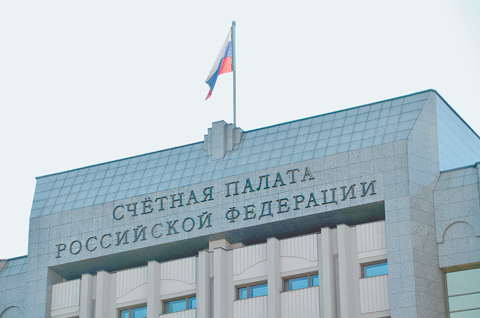
Photo: Lev Israelyan
The federal investment tax deduction has seen limited take-up among businesses, prompting calls for reform. Shokhin argued late last year that the parameters proposed by the government had effectively discouraged companies from using the mechanism.
The government has nevertheless been cautious about expanding investment incentives. In March 2026, the Ministry of Economic Development announced changes to the parameters for applying the Federal Investment Tax Deduction (FITD). The key change was granting companies within a group the right to claim the investment deduction regardless of their main type of economic activity
Previously, the right to use the FITD was only available to companies under a specific Russian National Classification of Economic Activities code. For example, if a parent company operated in manufacturing while a subsidiary worked in construction, which was not covered by the programme, the right to claim the deduction could now be transferred to the subsidiary. ‘This reduces administrative barriers and allows groups of companies to take a more flexible approach to upgrading fixed assets, regardless of which legal entity within the group makes the investment,’ explained officials from the Ministry of Economic Development.
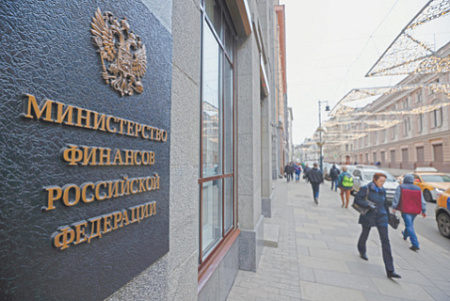
Although businesses continue to describe the current deduction as unattractive, the Ministry of Finance maintains that it supports investment.
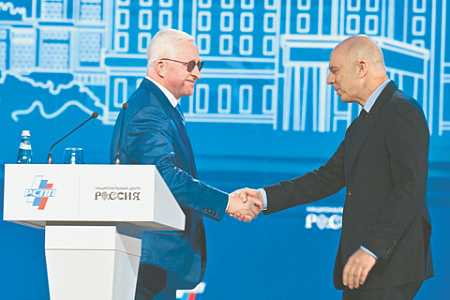
‘The FITD mechanism is developing. In the first quarter, the volume of deductions was already twice as high as in the same period last year. We expect the number of users to increase several-fold this year, partly because of expanded eligibility within groups of taxpayers. We are currently discussing further adjustments to the FITD as part of efforts to create attractive investment conditions for specific macro-regions,’ Minister of Finance Anton Siluanov said in an interview with the newspaper Kommersant.
Parliamentary oversight bodies offer a less optimistic assessment.
‘The quantitative analysis conducted by the Accounts Chamber found no statistically significant positive impact of the investment tax deduction on companies’ financial condition or investment activity. In its current form, the mechanism does not function as an effective investment stimulus,’ said auditor Mikhail Shchapov.
The audit found that many beneficiaries had not faced serious investment constraints and were not engaged in activities considered strategically important by the state.
More than half of all investment tax deductions granted between 2019 and 2024 went to companies in extractive industries, food production, chemicals and producers of alcoholic and sugary beverages. The Accounts Chamber noted that most recipient companies in these sectors were financially stable, making state support excessive in its view.
Following the audit, the Accounts Chamber recommended that the government amend the Tax Code to restrict eligibility for certain sectors, including mining, food production, beverages, tobacco and chemicals. It also proposed reducing the maximum deduction available for corporate charitable donations from 100% to 25%.
ORIGINAL: NG/Investment Tax Break Becomes a Mirror of Economic Policy