As public spending on healthcare comes under pressure, the Russian government has announced a new policy dubbed ‘Medicine 3.0’. Health Minister Mikhail Murashko says trillions of roubles are being lost in the treatment of chronic diseases, particularly among older patients. Artificial intelligence (AI) is set to play a leading role in Russia’s new healthcare model, identifying patients’ needs and detecting early signs of chronic diseases before they develop. Officials are likely to blame high mortality and low life expectancy on the population’s poor diet, lack of exercise, unhealthy habits and obesity. International comparisons, however, do not entirely support the claim that excess weight among part of the population is the main cause of the country’s healthcare problems
Obesity is the leading risk factor for chronic non-communicable diseases, Health Minister Mikhail Murashko said on Tuesday, October 20. ‘Medical research has now established that obesity is the most powerful driver of chronic non-communicable diseases, starting with cardiovascular conditions,’ the minister said. He explained that obesity can contribute to the development of 13 types of cancer
The previous day, specialists found that the draft new budget envisaged cutting spending on cancer control by almost 12 times. The figures were highlighted by Pharmaceutical Bulletin. The Health Ministry told the publication that the reduction in funding recorded under the federal project to combat cancer did not mean an overall cut in funding for medical care for cancer patients. Total funding for such care would remain unchanged
Cuts to public healthcare spending can nevertheless be identified by comparing the current three-year budget with the draft budget for the coming years. The draft allocates more than RUB 1.8 tn to healthcare next year. Funding for several areas is set to fall, most notably the state programme for healthcare development and the federal project to combat cancer, media reports have noted
Physical activity and a balanced approach to nutrition are the foundations of healthy longevity, Murashko said. Encouraging people to adopt healthier lifestyles and take preventive measures is therefore important, as this could significantly reduce the risks of death and disease, the health minister concluded. Stress, the consumption of modified foods and sleep problems also contribute to obesity, he said. Chronic diseases directly affect the economy because they are often diagnosed in people of working age
A day earlier, the health minister announced a new healthcare reform aimed at moving the country towards a new model of state-funded medicine. According to Murashko, the current model, which largely involves treating chronic illnesses in older Russians, is no longer compatible with the constraints on public funding
‘If we allow medicine to continue developing under the old paradigm, resource consumption will increase fivefold, and every second case of high-tech medical care will be directed towards older people. But our task is not simply to expand the volume of treatment. It is, in essence, to build a system of patient management and prevention that avoids creating such demand in the first place. We are effectively losing trillions of roubles, not because we do not know how to treat people, but because we are failing to tackle chronic diseases at their onset,’ Murashko said, according to Medvestnik.
According to the health minister, the guiding principle of modern primary care should be ‘monitor everyone, provide help according to need’. In other words, a general practitioner should not aim to collect the largest possible set of data, but to ensure ‘the right intervention for the right patient at the right time’. Unhealthy ageing, the official argued, places an excessive burden on the economy and drives rapid growth in the consumption of medical resources. About 24% of Russia’s population is now aged over 60. ‘But the greatest danger is not age itself. It is the accumulation of chronic diseases, the resulting volume of resources consumed and the decline in quality of life,’ Murashko said.
‘A 70-year-old today consumes more than five times as many healthcare resources as a 30-year-old,’ the minister noted. According to his figures, around 70% of Russia’s population has at least one risk factor for non-communicable diseases: smoking, alcohol consumption, an unhealthy diet or insufficient physical activity.
‘In practice, we rarely encounter just one isolated risk factor. A patient may have several at the same time,’ the health minister said. ‘All of these significantly increase the risk of death during working age or of developing serious non-communicable diseases that substantially reduce life expectancy. They also increase indirect costs, primarily those associated with premature mortality.’
‘Our goal is for people to remain independent, able to work and capable of leading active lives for as long as possible. That is why we need more than a collection of disconnected recommendations. We need an assessment of overall risk and a clear plan to reduce it. For each individual, these measures should form a coherent, continuous pathway: identify a risk factor or disease, determine the course of action, arrange regular monitoring and assess the results. The general practitioner has a key role to play here,’ Murashko said.
His ministry is placing considerable hopes on promises from developers of artificial intelligence technologies. The minister said AI should be trained to identify new opportunities for established methods and to ‘see the patient’. The overarching goal is to create a complete digital profile for every patient within their electronic medical record and ensure that at least 70% of the target population receives regular medical monitoring. Another priority is treatment oversight: 80% of patients should receive the full range of care, while at least 50% should reach target health outcomes through personalised recommendations and monitoring of adherence to treatment.
The emphasis Russian officials place on obesity and unhealthy lifestyles as the main determinants of life expectancy is not fully borne out by international comparisons. The prevalence of excess weight in Canada, for example, is broadly comparable with that in Russia. Yet Canadians live almost 10 years longer than Russians. This difference is more likely to reflect inadequate funding for Russia’s healthcare system and limited access to modern medical care across the country
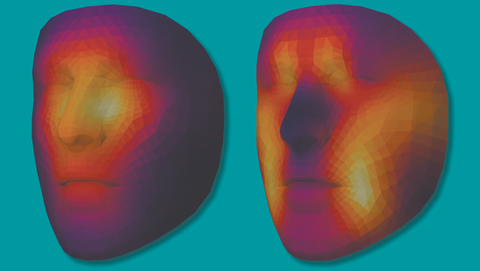
Meanwhile, Russian officials’ repeated references to the future potential of artificial intelligence are very much in line with trends in Western commercial healthcare. The Russian Health Ministry may be interested to learn that foreign start-ups are already promising to assess cancer outcomes from photographs. Neural networks can analyse a person’s face to estimate their biological age and assess the survival prospects of cancer patients
This is discussed in a new article in The Lancet Digital Health.
‘As populations age, clinicians need new ways to assess physical reserves and frailty in order to recommend intensive treatments such as radiotherapy, surgery or systemic therapy,’ said the study’s author, Raymond Mak, an oncologist at the US non-profit organisation Mass General Brigham. ‘Our goal is to make health assessments based on facial photographs more quantitative, consistent and scalable, so that they can support personalised treatment decisions rather than replace clinical judgement,’ he said, according to RTVI.
ORIGINAL: NG/Health Ministry Seeks to Cut the Cost of Treating Russians