A new report by Russia’s Audit Chamber highlights the broader deterioration in the country’s economic conditions. Rising corporate losses and falling profits have reduced revenues in the most vulnerable regions, while the overall surplus in regional budgets at the start of the year has turned into a deficit, despite cuts to spending on healthcare, transport and roads in many regions
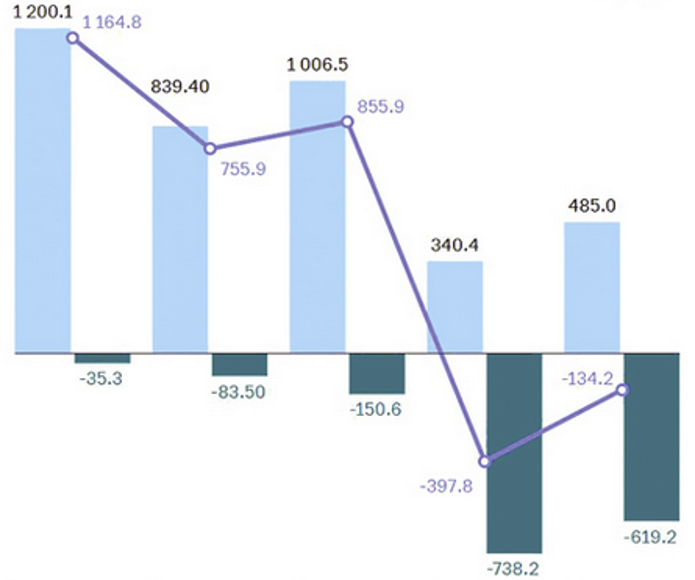
In the first quarter, the consolidated budgets of Russia’s regions recorded a surplus of RUB 140 bln. By the end of the first half of the year, however, the surplus had turned into a deficit of more than RUB 134 bln. That was still below the RUB 398 bln deficit recorded in the first half of 2025. The nationwide figure, however, masks wide differences between regions. Twenty-four of Russia’s 89 regions continued to run budget surpluses. At the same time, the latest statistics identify the regions facing the greatest pressure. The highest deficits relative to current revenues were recorded in the Jewish Autonomous Region, at 30.8%, followed by Vologda region at 31.2%, Kemerovo region at 28.6% and Irkutsk region at 26.2%.
Nominal budget revenues are falling in 11 regions. Five regions have recorded lower revenues for a second consecutive year: Crimea, Krasnodar region, Vologda region, Kemerovo region and the Nenets Autonomous District.
The largest nominal declines were recorded in Kursk region, where revenues fell by RUB 40.9 bln, or 36.2%; Belgorod region, down RUB 11.1 bln, or 12%; Crimea, down RUB 7.2 bln, or 5.5%; and Sevastopol, down RUB 6 bln, or 15.2%.
‘The composition of regional budget revenues is undergoing significant changes. The share of corporate profit tax continues to decline, from 23.1% in the first half of 2025 to 22.9% in the first half of 2026. At the same time, the share of personal income tax has increased from 31.1% in the first half of last year to 33.1% in the first half of this year,’ said Natalia Trunova, an auditor at the Audit Chamber
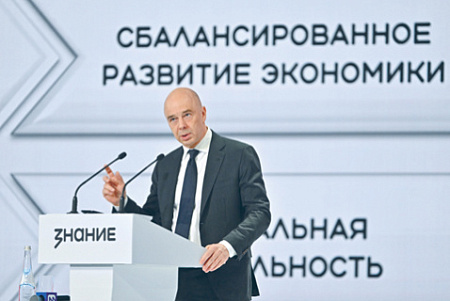
The Ministry of Finance forecasts that the regional budget deficit could approach RUB 2 tn by the end of the year. The ministry, headed by Anton Siluanov, has set a target of almost halving the shortfall. Regional officials and lawmakers, however, have opposed the ministry’s uniform approach to cutting regional budgets (see Nezavisimaya Gazeta, September 20, 2026).
The stability of regional budgets is the direct responsibility of the federal government and the Ministry of Finance, President Vladimir Putin has said. He has also pledged to provide tailored support measures, including liquidity assistance for regional budgets
The stability of regional budgets is the direct responsibility of the federal government and the Ministry of Finance, President Vladimir Putin has said. He has also pledged to provide tailored support measures, including liquidity assistance for regional budgets
Tensions over regional budgets occasionally spill into the public domain, with some governors openly criticising the Finance Ministry’s demands for spending cuts. Alexander Drozdenko, governor of Leningrad region, said the ministry had ordered the region to halve its budget deficit and cut spending by 5%. In a number of regions, officials are complying with the ministry’s requirements while describing them as ‘tough’. In June, Andrei Makarov, chairman of the State Duma budget committee, also warned against what he saw as an excessively uniform approach by the Finance Ministry to assessing regional budgets (see Nezavisimaya Gazeta, September 20, 2026).
Georgy Filimonov, governor of Vologda region, is also seeking ways out of the budget crisis. Corporate profit tax receipts in the region have fallen 2.4-fold. In the first half of 2026, corporate profit tax revenues declined in 32 regions, with falls of more than 20% recorded in eight of them
Fifteen regions have recorded a decline in corporate profit tax revenues for three consecutive years: Bashkortostan, Buryatia, Karelia, Krasnodar region, Stavropol region, Astrakhan region, Belgorod region, Bryansk region, Vologda region, Kemerovo region, Lipetsk region, Nizhny Novgorod region, Oryol region, Samara region and Sverdlovsk region
| I полугодие 2022 года / First half of 2022 | I полугодие 2023 года / First half of 2023 | I полугодие 2024 года / First half of 2024 | I полугодие 2025 года / First half of 2025 | I полугодие 2026 года / First half of 2026 | |||
| Суммарный профицит / Combined surplus | Суммарный дефицит / Combined deficit | Сальдо / Balance | Количество регионов / Number of regions | ||||
Deficit and surplus of consolidated budgets of Russian regions in the first halves of 2022–2026. Source: Russia’s Audit Chamber
The decline in corporate profit tax receipts reflects a broader deterioration in companies’ financial health. Total losses reported by Russian companies increased by 7% in the first half of the year compared with the same period in 2025. At the same time, the share of loss-making companies increased from 30.4% last year to 33.5% in 2026.
The increase in regional budget spending nationwide has broadly tracked inflation. Against last year’s base, growth in regional spending slowed to 5.8%, compared with a nominal increase of 15.7% in January-June 2025
Nominal budget spending increased in 73 regions, with growth exceeding the 5.8% consumer price inflation rate in 55 of them. Spending fell in 16 regions. The sharpest declines were recorded in Kursk region, down 39.7%; the Yamalo-Nenets Autonomous District, down 14.4%; Sevastopol, down 13.3%; the Republic of Tuva, down 9.1%; and Tyumen region, down 8.4%.
Education traditionally accounts for the largest share of regional budget spending, at 27%, followed by social policy at 21.3%, the national economy at 18%, housing and utilities at 9.6%, and healthcare at 7.9%. The overall picture is significantly affected by spending changes in Moscow, which accounts for 19.4% of total expenditure by all Russian regions. Excluding a 23.3% decline in Moscow’s spending on the national economy, overall spending growth nationwide was 3%. Excluding a 54% increase in Moscow’s housing and utilities spending, the nationwide increase in utility spending was 6.4%.
ORIGINAL: NG/Corporate Profit Tax Exposes Russia’s Most Vulnerable Regions