Individual housing construction (IHC) has plunged this year, after emerging as the main driver of Russia’s housing market and helping the government post relatively strong headline figures for overall housing completions. The downturn is a logical consequence of Russia’s economic cooling, which is weighing on demand and investment activity. Housing construction fell 14% year on year in January-August, with individual housing construction bearing the brunt of the decline
The Ministry of Construction has recorded difficulties with housing completions in some regions, but the nationwide target of about 100 mln sq m of housing in 2026 will be met, Construction Minister Irek Faizullin told reporters
Russia built 108.1 mln sq m of housing last year, according to Rosstat data. The sector barely grew, expanding by just 0.3% from 2024.
The picture is worse this year. ‘Overall, we are seeing a 14% decline compared with last year,’ Deputy Prime Minister Marat Khusnullin said, citing figures for January-August 2026
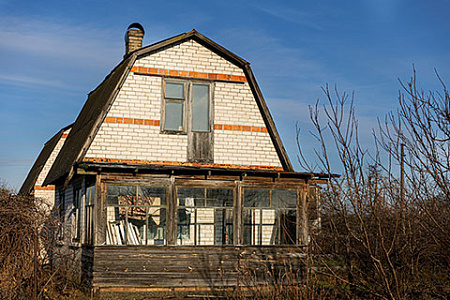
The biggest change this year has been the sharp contraction in individual housing construction, which until recently had been the main driver of the sector. IHC fell 23.5% year on year in January-August.
‘Multi-family housing completions increased by almost 8% in volume … but IHC has fallen sharply,’ Khusnullin said. His comments pointed to the high key rate and limited access to mortgages for individual housing as the main factors behind the decline
Dmitry Proskurin, commercial director at Metrium, told Nezavisimaya Gazeta that the decline in IHC partly reflects the high comparison base from 2025, when the suburban housing market recorded a historic high of 63.5 mln sq m of private housing construction.
‘Last year, demand for comfort- and business-class cottages was growing rapidly ahead of tighter terms for family mortgages and expectations that the dacha amnesty would come to an end,’ he said.
Another factor is a shift in household behaviour, according to Yulia Kovalenko, an expert at the Plekhanov Russian University of Economics. Between 2020 and 2024, particularly during the pandemic, companies increasingly moved towards remote working. This prompted some families to buy land and invest in building their own homes
The trend has now begun to reverse. Employers are bringing staff back to fully office-based work or, at most, allowing hybrid arrangements in which employees are required to spend at least several days a week in the office. Although the effect is indirect, this is also beginning to weigh on the suburban residential property market
The increase in activity among multi-family housing developers this year can be explained by two factors, Proskurin said. First, a moratorium on penalties payable to equity holders for delays in completing residential projects has expired. Second, developers are completing projects that were originally due to be delivered in 2025 but were subsequently delayed
Despite the divergent trends in individual and multi-family construction, however, IHC completions remain more than 1.5 times higher than those of new-build urban housing, Proskurin said.
Rosstat data show that of the 58 mln sq m of housing built across Russia in January-August, private homes accounted for about 62%, or roughly 36 mln sq m. Multi-family buildings accounted for the remaining 38%, or about 22 mln sq m.
Rosstat data show that of the 58 mln sq m of housing built across Russia in January-August, private homes accounted for about 62%, or roughly 36 mln sq m. Multi-family buildings accounted for the remaining 38%, or about 22 mln sq m.
‘We have prepared a whole range of measures. These include increasing the amount of land available, simplifying procedures for transferring land and expanding urban-development potential. We hope this will give us an additional increase in IHC completions,’ Khusnullin said.
The Ministry of Construction has also said it plans to revive the Stimulus programme, potentially in 2027, with the scheme refocused specifically on individual housing construction rather than the housing sector as a whole.
The Stimulus programme operated from 2018 to 2024 as part of the Housing federal project under the Housing and Urban Environment national project. It provided co-financing from public budgets for developers’ costs of building essential infrastructure alongside residential projects.
The programme was credited with helping to build and upgrade about 1,600 km of roads, commission 203 educational facilities and 12 healthcare facilities, and lay 2,000 km of engineering networks. According to Ministry of Construction estimates, almost 13% of all housing built during the same period was ‘in one way or another linked to the programme’.
Recent comments by Faizullin indicated that the revived programme would support infrastructure associated with individual housing construction
The outlook for IHC will depend to a large extent on how the terms of the subsidised family mortgage programme change after October 1, Proskurin said. In future, he added, customers could again shift towards the suburban market, where the cost per square metre is traditionally lower than in urban new-build developments. Reviving the Stimulus programme should also provide a boost to individual housing construction, he said.