The Ministry of Economic Development unexpectedly raises its GDP growth forecast for 2026 from 0.4% to 0.6% and expects steep growth acceleration over the next three years. The Ministry states the expansion will be driven by sectors geared towards domestic demand, primarily manufacturing ones. However, this belief appears questionable, especially after a two-year slump in investment that the government surely could not have failed to notice. The foundations for the expected rebound look fragile: Rosstat data for January–August show industry stagnating, while several manufacturing sectors remain in decline. Oil refining, metals, paper and building materials recorded the weakest performance in the first eight months of the year
The government reviewed its social and economic development forecast for 2027–2029 at a meeting on Thursday, September 24. The forecast will form the basis for the new federal budget.
The discussion of the three-year outlook began with a revised forecast for the current year. ‘We have raised our estimate for economic growth in 2026 to 0.6%,’ said the Minister of Economic Development Maxim Reshetnikov. ‘For 2027–2029, we expect growth to accelerate from 1.4% in 2027 to 2.4% in 2029.’ The Ministry has therefore made a modest but unexpected upgrade to its recent forecast for 2026.
Exactly a year ago, the Ministry’s baseline forecast put GDP growth at 1.3% for 2026. In May this year, it cut the projection to just 0.4%. Now, paradoxically, the Ministry has raised its GDP growth forecast while sharply downgrading its outlook for investment
Moreover, the country also experienced a 2.3% investment decline in 2025.
Given this, the government’s new three-year outlook for fixed capital investment growth looks unreasonably optimistic: investment is projected to grow by 0.2% in 2027 and 2.5% in 2028, before accelerating to 3% in 2029.
When talking about the three-year outlook, Reshetnikov said economic growth would be driven by sectors geared towards domestic demand, primarily manufacturing ones
‘Output in these sectors will grow by around 3.5% per year. The fastest growth will be shown in pharmaceuticals and mechanical engineering, including railway equipment, aircraft and electronics manufacturing. Tourism, IT and agriculture will also expand at an above-average pace,’ the Minister said
However, the basis for such an optimistic outlook remains unclear. Under current conditions, we doubt that industries geared not simply towards domestic demand, but specifically non-military sector demand, can deliver sustained growth.
‘The situation in manufacturing offers little cause for optimism. Amid the decline in capital investment that has persisted for several quarters, there is little reason to expect growth to accelerate,’ said Boris Kopeikin, Chief Economist at the Stolypin Institute for Growth Economics. ‘Producers’ costs continue to rise.
‘Plans have just been announced for a further increase in the tax burden. This will affect both the sectors concerned and consumer spending,’ Kopeikin said. More broadly, he believes consumer demand is unlikely to continue supporting economic growth as it has in recent months. ‘And with the key rate remaining exceptionally high, borrowing remains prohibitively expensive,’ he added.
Kopeikin believes even maintaining modest growth in the manufacturing sector in 2026 would be a very optimistic scenario
As if to underscore the point, the Ministry of Economic Development has downgraded its industrial output forecast. It is now expected to contract by 0.2% in 2026, compared with growth of 0.6% projected in May and 2.3% in the forecast published last autumn
How the economy can move from such fragile foundations to the GDP growth rates projected for the next three years remains highly unclear.
Rosstat data for January–August showed industry stagnating, with output unchanged from the same period of 2025. While this figure covers industrial output as a whole, many manufacturing sectors remain in decline.
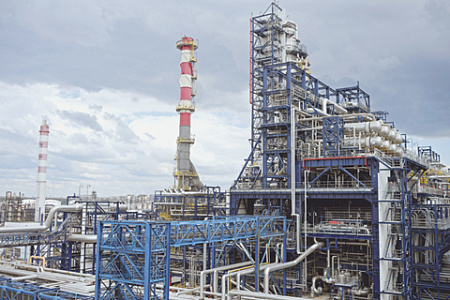
Output of coke and petroleum products fell by more than 10% YoY in the first eight months of 2026. Paper production declined by more than 8% over the same period, while metals dropped by more than 5%. Production of other non-metallic mineral products (building materials) contracted by almost 5%.
Beverage and clothing production each saw a drop of around 4%, as did wood processing and the manufacture of wood products. Output of chemicals and chemical products declined by 3%, while electrical equipment production fell by 1.5%.
As experts have repeatedly noted, the manufacturing sectors still recording growth are primarily those directly or indirectly linked to the needs of the special military operation and the military sector.
According to Rosstat, output of ‘other transport equipment, including aircraft and ships’ surged by almost 19% YoY in January–August. Production of pharmaceuticals and materials used for medical and veterinary purposes increased by 11.5%. Output of ‘fabricated metal products, except machinery and equipment’ grew by 11% over the same period, while production of computers, electronic and optical devices rose by almost 5%.
But the growth was not confined to these sectors. Notably, the production of motor vehicles, trailers, and semi-trailers also saw significant growth, increasing by almost 5% over the period.
Of course, there is an explanation for the car industry’s performance
‘The strong growth in vehicle production has been driven primarily by protective levies on imports, with consumers footing the bill through higher prices,’ Kopeikin told Nezavisimaya Gazeta. ‘The industry’s long-term competitiveness, however, remains highly questionable.’
Furniture production grew by 1.3% YoY in the first eight months of 2026, food production by 0.7%, leather and leather goods by 0.4%, and rubber and plastic products by 0.3%.
Overall, of the 24 manufacturing industries tracked by Rosstat, 10 recorded year-on-year growth in January–August, while 14 contracted.
ORIGINAL: NG/Manufacturing Sector Teetering on the Brink of Stagnation and Decline