Prime Minister Mikhail Mishustin ordered the cancellation of more than RUB 100 billion in budget loans owed by 21 Russian regions at a weekly meeting with deputy prime ministers on Monday. The funds freed up by the move are expected to go towards ‘further improving the economy’. Regional public debt now exceeds RUB 3.5 trillion, and officials have promised to write off about a third of that amount. Russia’s Accounts Chamber has previously questioned the effectiveness of cancelling budget loans in exchange for investment projects. Auditors have proposed reversing the mechanism: first implement the projects, then cancel the debt, rather than the other way round.
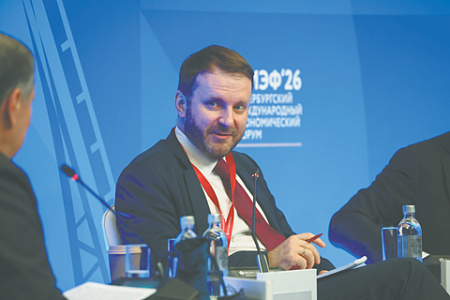
‘The government continues to support the development of regional infrastructure and the creation of attractive conditions for business locally,’ Mishustin said.
‘One of the most effective tools in this work has been the cancellation of two-thirds of budget loan debt. Today we are extending this support to another 21 Russian regions, reducing their combined debt by more than RUB 114 billion,’ Mishustin told the meeting.
The write-offs will apply to Udmurtia, Chuvashia, Karelia, Komi and Mordovia, the Krasnodar, Perm and Khabarovsk territories, the Jewish Autonomous Region, the Voronezh, Kaliningrad, Kemerovo, Magadan, Nizhny Novgorod, Omsk, Penza, Pskov, Samara, Tomsk and Yaroslavl regions and the Nenets Autonomous District.
The Russian prime minister said the regions had directed a significant share of their own funds towards engineering works needed to launch new investment projects, as well as towards modernising housing and utilities, including replacing lift equipment. The government believes the debt cancellation will free up substantial resources in regional budgets and support further economic development.
Earlier in April, the government cancelled RUB 31 billion in budget loan debt owed by 16 regions. ‘The government continues to strengthen the financial capacity of regions that are actively implementing infrastructure projects and creating attractive conditions for investors,’ Mishustin said in mid-April. Such regions are eligible to have two-thirds of their budget loan debt written off. The list included regions that had allocated a significant share of their own funds to implementing city master plans, improving housing and utilities and upgrading public transport.
At the end of April, President Vladimir Putin backed a proposal to restructure Russian regions’ budget loan debt by extending repayment deadlines. The plan would push back repayments due in 2026 to a later date, freeing up around RUB 100 billion for social support.
Putin also recalled that a decision had already been taken to cancel two-thirds of regional budget loan debt, provided the regions used the freed-up funds for investment and other priority goals.
‘This is more than RUB 1 trillion through 2030. Two-thirds of the budget loan debt is being written off. The regions are repaying the remaining portion on schedule. This year, that is about RUB 100 billion. But we know that for many regions even the current burden is quite high,’ he said.
Following Putin’s proposal, the finance ministry submitted a bill to the government that would postpone repayment of part of the regions’ budget loan debt from 2026 to 2030. The ministry said the measure concerned the one-third of the debt not subject to cancellation and due to be repaid by the regions this year. Extending the repayment deadline would allow regions to reallocate budget resources to priority tasks, the ministry said.
Finance Minister Anton Siluanov said last week that Russian regions’ public debt currently stood at about RUB 3.5 trillion, of which almost a third would be written off. He was speaking at a meeting of the presidium of the Council of Legislators at the Federal Assembly.
Russia’s total regional public debt exceeded RUB 3.48 trillion by the end of 2025, up 10.6 % over the year, according to the finance ministry. In absolute terms, debt rose by RUB 333.5 billion. Public debt fell in 51 regions and increased in 38. The debt burden on regional budgets rose by 1.1 percentage points to 18.9%. Budget loans accounted for the largest share of regional debt, at more than 67 %.
Analysts at the RIA Rating economic research centre, citing data from the Federal Treasury and the finance ministry on regional debt obligations and budget revenues, said only six Russian regions had public debt below 10 % of their tax and non-tax revenues. In 15 regions, the debt burden exceeded 50 % of budget revenues last year, and in six of them it was above 70 %.
Last year, under the programme to cancel two-thirds of regional budget loan debt, RUB 227 billion of debt was written off for 58 regions. ‘This year the government has already decided to write off RUB 41.7 billion in debt owed by another 28 regions. A decision covering 21 regions and RUB 114 billion has also been submitted to the government. The total amount written off so far stands at RUB 383 billion, or 35 % of all funds being freed up. Nine regions have already had their debt fully written off,’ Siluanov said at the end of April.
Budget loans accounted for more than 79 % of total regional public debt, according to the Accounts Chamber. As of October 1, public debt in 40 of Russia’s 89 regions consisted solely of obligations under budget loans.
The Accounts Chamber has also repeatedly pointed to the ineffectiveness of the mechanism for cancelling regional debt in exchange for new investment. Auditors said new investment projects approved and implemented by the authorities using federal funds, more precisely through the write-off of part of a region’s debt to the federal budget, had produced insufficient results and had not had a significant effect on companies’ economic or investment activity. According to the auditors, as of August 1, 2025, the total declared write-off for 56 regions exceeded RUB 168 billion. Of that amount, only 5.6 %, or about RUB 9.4 billion, had been directed towards implementing new investment projects.
Auditors said the new mechanism had the strongest positive effect on companies that financed 70 % to 75 % of total investment costs from their own resources. The Accounts Chamber therefore proposed capping the regional budget’s share of costs at 25 % to 30 %. It also proposed changing the debt write-off scheme: investment projects should be implemented first and debt written off afterwards, rather than the other way round (see NG dated December 25, 2025).
The finance ministry, meanwhile, is offering regions a new instrument this year: treasury loans ‘on demand’.
‘This is a treasury credit line that will be provided to cover cash gaps within a month. The innovation will be introduced this year so that regions do not have to turn to commercial banks for expensive loans,’ Siluanov said.
Monday’s meeting with deputy prime ministers also discussed preparations for the children’s summer camp season.
Officials promised to pay particular attention to quality and safety. ‘To that end, under the relevant infrastructure modernisation programme, we build and refurbish dozens of dormitories, medical centres and canteens every year,’ Mishustin said. Last year, around 40,000 health and recreation facilities of various types hosted more than 5.5 million children, he added.
Existing infrastructure will be able to accommodate more than 5.75 million children this summer, more than last year, Deputy Prime Minister Dmitry Chernyshenko said on Monday. More than 40,400 facilities will operate this summer, including 2,200 permanent camps. In addition, 82 residential modules are due to be built in 44 regions this year, while 38 facilities will undergo major repairs.
Chernyshenko said all new facilities must meet accessibility requirements for children with disabilities. ‘An updated procedure for medical care in children’s camps has also been in force since September 1 last year. The required equipment list for medical rooms and the list of medicines have been revised. Children with chronic conditions can now use their own medical devices, such as glucose meters or hearing aids, under medical supervision. The list of specialists allowed to work in camp medical rooms has also been expanded,’ the deputy prime minister said on Monday.
Officials said nothing, however, about the limited affordability of children’s summer recreation for most Russian families. Russian lawmakers have repeatedly drawn attention to the problem. Last year, Chairman of the State Duma Vyacheslav Volodin cited a survey in which more than 60 % of respondents said children’s health and recreation camps were unaffordable. Volodin said users had pointed in comments to difficulties buying camp vouchers, high prices, dilapidated facilities and a shortage of places.
Nina Ostanina, head of the Duma committee on family protection, fatherhood, motherhood and childhood, has also said children’s summer recreation remains unaffordable for most Russian families.
‘In the Vladimir Region, a camp voucher costs RUB 123,000. That is unaffordable, especially for a large family,’ she said. Ostanina also pointed to exorbitant air fares for children and the lack of affordable train tickets. The cheapest tickets on popular routes sell out within minutes, she said.
Tatyana Ivanova, head of the children’s recreation committee at the Russian Union of Travel Industry, said that out of 18.8 million school-age children, only about 6 million go to children’s camps. That means 70 % of children are not covered by organised summer recreation at all, she stressed. ‘Of the 6 million camp vouchers last summer, only 2.2 million were financed from regional budgets. Parents paid for the rest,’ said Tatyana Kozlovskaya, executive director of the tour operator Inters