
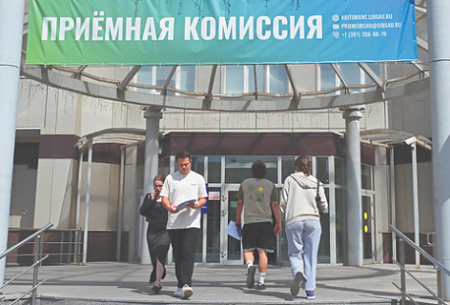
Prime Minister Mikhail Mishustin has signed an order setting quotas for admission to sponsored university programmes funded from the federal budget for 2026. The main change is a sharp reduction in places, with priority given to technology, education and healthcare. Officials say the new system should improve uptake, as quotas were previously often less than half filled. Experts argue the changes reflect a broader policy shift towards training students only in fields deemed a priority for the state.
‘Workforce issues are fundamental today for the country’s development and the delivery of national projects, including technological leadership,’ Mishustin said at a government meeting.
More than 83,000 places have been allocated for sponsored programmes in 2026, significantly fewer than in previous years, when the annual quota typically exceeded 140,000.
According to the government, more than a third of the new intake is earmarked for healthcare, 20,000 places for engineering, over 13,000 for teacher training and around 9,000 for agriculture.
The quotas have been set on the basis of applications from companies and organisations, the government said. Another key change for 2026 is that they are fully detailed for the first time by mode of study, full-time, part-time and distance, and across all levels of higher education, with a precise breakdown by specialism and field. The number of places is also specified by employer, educational institution and the region where graduates are expected to work after completing their studies.
‘These quotas have, for the first time, been fully detailed. Crucially, they are based on applications from companies and organisations, allowing regional labour needs to be properly reflected, guaranteeing graduates a job in their field and enabling employers to attract trained and motivated specialists,’ Mishustin said.
As a result, each place will now be tied to a specific sponsoring employer.
Sponsored education refers to a form of university admission under a dedicated quota, whereby an applicant is admitted to a state-funded place in the interests of a specific employer. Admission is based on a contract between the student and the sponsor, typically a large company or state organisation seeking to train specialists.
Under such agreements, the sponsor guarantees employment after graduation and may provide additional support, including enhanced scholarships, housing and travel allowances, etc. In return, the student undertakes to complete the programme and work for the sponsor for a specified period, usually at least three years.
Previously, however, dedicated quotas were far less detailed, specifying only the share of places allocated to such admissions within the overall intake for a given specialism. In effect, quotas were assigned in advance, which led to low uptake.
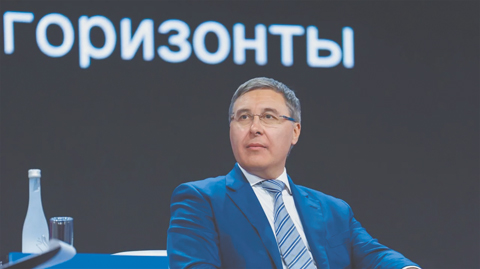
Following the 2025 admissions cycle, only around 40 % of dedicated places were filled. ‘In the 2025/26 academic year, admissions within this quota across bachelor’s, specialist, master’s and postgraduate programmes totalled 48,259 students, including 19,625 on bachelor’s programmes, 24,715 on specialist programmes and 2,901 on master’s programmes,’ the ministry headed by Valery Falkov reported.
By comparison, in 2024 the fulfilment rate for dedicated quotas was even lower, at 34.4 %.
Unfilled sponsored places were typically reallocated to the state-funded places.
The Ministry of Science and Higher Education (Monobrnauki) said the changes to admission rules are intended to improve uptake, as employers previously made limited use of the quotas due to a lack of clarity over how many applicants would enrol through this channel. The more detailed system is expected to create a clearer ‘talent pool’ for each participating employer.
Changes to admission rules at Russian universities will also affect how unfilled quota places are redistributed. Under the new rules, vacant sponsored places on bachelor’s and specialist’s programmes will first be reassigned to specific categories of applicants, for example participants in the military operation.
Unfilled sponsored places on master’s programmes, by contrast, will be transferred directly to the general competition for state-funded places.
In effect, each sponsored place will now be tied in advance to a specific employer. Applicants will be able to review their obligations to the sponsor before applying.
Terminating such contracts will also become more difficult. Failure to meet the terms may result in compensation for training costs, at least equivalent to the first year’s fees, and in some cases additional penalties. In other words, if a student fails to complete their studies or refuses to fulfil the required period of employment, they will be obliged to reimburse the sponsor’s costs.
The authorities are continuing to overhaul admission rules. In 2024, sponsored admissions were conducted via the ‘Work in Russia’ digital employment platform, with employers required to post vacancies on the portal and applicants submitting their applications through the same system.
Experts say the changes to sponsored admissions are part of a broader government effort to address labour shortages.
‘This decision fits into a wider package of measures aimed at rebalancing the labour market. Under the new system, each such place is tied to a specific sponsor, making the transition from education to employment more transparent. However, the appeal of such places for high-achieving applicants will depend on what companies are prepared to offer their future employees,’ said Ivan Ermokhin, a research fellow at the International Best Practices Analysis Department at the Gaidar Institute.
Indeed, the changes to sponsored admissions are in line with the broader direction of state education policy. Officials have repeatedly stressed the need to align higher education more closely with the needs of the domestic labour market.
‘Outdated, at times frankly archaic courses and programmes that do not meet the needs of the economy should be phased out,’ President Vladimir Putin said, calling for a greater share of practical training using modern design and engineering tools already employed in industry.
Prime Minister Mikhail Mishustin told lawmakers last year that the government is taking active steps to ensure the education system reflects labour market demand. A forecast of workforce needs has already been compiled and will ‘serve as a benchmark for determining the number of state-funded places’, he said.
In effect, higher education will increasingly train the number and type of specialists deemed necessary by the state. Recent changes to both state-funded and fee-paying admissions point in the same direction.
For the 2026/27 academic year, Minobrnauki will allocate 620,500 state-funded places, including 371,000 for full-time bachelor’s and specialist’s programmes. Priority will be given to regional institutions, with their share of places set to rise to 73.4 %.
An increase in state-funded places is planned in engineering, agriculture, medicine, as well as in mathematics and the natural sciences. By contrast, places in the humanities, arts and culture are set to see a ‘slight’ reduction.
‘Colleagues, I ask you to look carefully at which fields and specialisms your universities are requesting state-funded places for, and compare this with the needs of your regional labour markets. In some cases, the two are far from aligned,’ Valery Falkov said, also urging regions to review fee-paying admissions.
In February, the minister said that 47,000 places, or 13 % of the total number of fee-paying places, had been cut under the new law regulating paid admissions. The reductions affected private institutions and programmes such as economics, law, management, advertising and public relations.
In total, around 40 fields of study will be affected by the cuts.
‘This is consistent with what we saw before 2025. Enrolment exceeded labour market demand, and it was clear that such numbers of specialists were not needed. It also sends the right signals to school pupils, who choose their future careers three to five years before their final exams. Regulating fee-paying admissions is intended to align education as closely as possible with labour market needs, both nationally and at the regional level,’ Falkov said late last year.
Experts believe that cutting fee-paying places will redirect applicants towards vocational colleges, in line with the authorities’ aims.