Sergey Chizhov
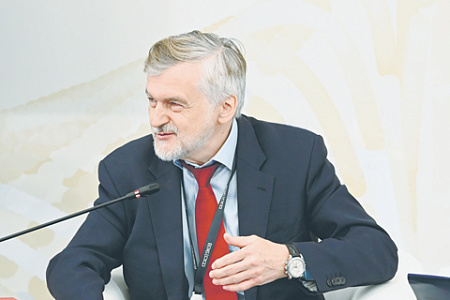
About the author: Sergey Viktorovich Chizhov is a State Duma deputy from United Russia and heads a subcommittee on classified budget expenditures
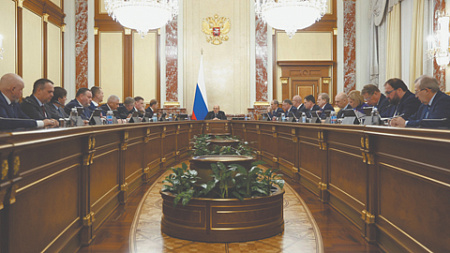
At a recent meeting with ministers, President Vladimir Putin called for an explanation of why economic indicators had fallen short of official projections, noting that GDP contracted by 1.8 % in January and February.
The decline, he said, affected manufacturing and industrial output overall, as well as the ‘systemically important’ construction sector. He instructed officials to prepare measures aimed to restore growth, support business activity and shift employment towards more productive sectors.
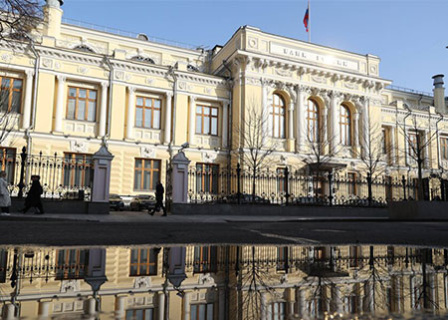
The Central Bank sets policy on Fridays, and at its meeting planned on April 24 most analysts expect a rate cut from 15 % to 14.5 %.
Inflation in Russia stalled in the week of April 7–13, according to Rosstat, with average daily price growth since the start of the month at just 0.013 %. Household inflation expectations have also eased, falling from 13.4 % in March to 12.9 % in April.
Even so, analysts do not expect the regulator to accelerate the pace of rate cuts. Notably, in materials for its March 20 meeting, the Central Bank warned that keeping the rate unchanged could risk excessive economic slowdown.
Last month, speaking in the State Duma, Head of Central Bank Elvira Nabiullina identified low labour productivity as the main constraint on the economy. By this measure, she said, Russia lags well behind leading countries.
‘Efficiency is the key driver of economic growth,’ she argued.
According to the Central Bank head, the economy can no longer expand through extensive growth, as the workforce is fully utilised and unemployment is at a historic low of 2 %. As a result, further development is possible only through gains in labour productivity.
One driver of labour shortages is the demographic crisis, while one consequence has been the large-scale inflow of migrant workers. But this is only a partial solution. The main route to higher productivity is automation.
Robotics, however, is capital-intensive. The state could either subsidise such investment directly, while also backing domestic robot production, or support it indirectly by ensuring macroeconomic stability. That would allow companies to finance automation through low-cost borrowing, in anticipation of future returns.
In 2023 and 2024, the economy grew at a fast pace, 4.1 % and 4.9 % respectively, while lending expanded by as much as 22 % a year. During that period, businesses could broadly be divided into three groups.
The first relied on their own funds and avoided borrowing. That was prudent, but such companies generally did not expand or raise productivity. The second took on substantial debt but effectively consumed it without generating growth. The third also borrowed, but channelled those funds into expansion, launching new projects and boosting productivity, including through automation.
When the boom ended, both groups of borrowers came under pressure. But there is a fundamental difference between them. Those who took on debt to finance modernisation were, in effect, placing their trust in the state. They believed forecasts that the strong growth of 2023–2024 would last long and that macroeconomic stability was assured, and committed to upgrading in an effort to improve efficiency.
The state could now support these ground breakers that have succeeded in raising productivity. For example, it could restructure their debt through development institutions, allowing such businesses to respire and fully realise the gains from automation.
For now, however, high borrowing costs continue to constrain development. The key rate was cut to 15 % in March, but further reductions are needed, to 12 % this year and to 7 % next year, to create conditions for growth.
In setting the rate, policymakers should take into account business profitability in Russia. In 2023–2024, the average return on sales across the economy was 12.7–13.5%. In manufacturing it reached 14.7 %, while in retail it ranged from 5% to 15%. In a key sector such as the automotive industry, it stood at 9.7 %.
During a discussion in the State Duma, I noted to Elvira Nabiullina that as of March 1 households held a vast RUB 67 billion in deposits with commercial banks. These funds could help finance infrastructure projects and process lead, particularly at the regional level.
I asked whether the Central Bank plans to expand investment opportunities for individuals to channel savings into high-reliability projects, especially in their home regions. Nabiullina replied that the regulator is developing such instruments.
In her view, however, investment is the key driver of growth, and the primary source of funding remains companies’ own revenues. On that front, she argued, the situation is relatively sound: despite some decline, corporate profits last year exceeded RUB 27 billion.
In my view, profits are falling too sharply, as the data show. Consider the following:
– 2021: RUB 29.4 billion, a record post-pandemic rebound, up 2.4 times on 2020, driven by recovery of global demand and high commodity prices.
– 2022: RUB 25.9 billion, a 12.6 % decline, reflecting the impact of sweeping sanctions and the reconfiguration of logistics chains.
– 2023: RUB 32.7 billion, a historic peak, with a significant contribution from sectors linked to defense procurement and import substitution.
– 2024: RUB 30.4 billion, down 6.9 % from 2023, as rising costs and high borrowing rates began to weigh on performance.
– 2025: RUB 27.1 billion, a further decline of 10.9 % year on year, driven mainly by expensive cost of depts and weakening demand in a number of sectors.
The Central Bank does not intend to cut the key rate rapidly. The regulator believes ‘this should be done gradually, so as not to trigger excessive demand growth and renewed inflationary pressure’. In that case, innovative businesses will remain on the spot.
State Duma speaker Vyacheslav Volodin has not ruled out revisiting the Central Bank’s mandate, which is currently focused primarily on curbing inflation.
‘Why is our Central Bank not responsible for economic growth?’ he asked, pointing to countries where central banks are also tasked with addressing unemployment. ‘This is all determined by national legislation,’ he said.
Perhaps the time has come to open a broader debate on amending the law governing the Central Bank.