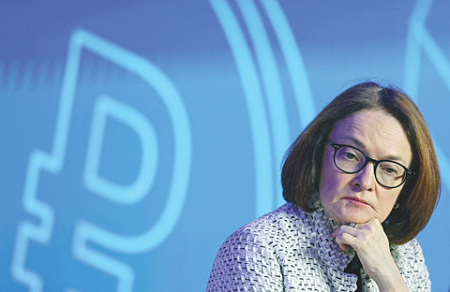
Elvira Nabuillina’s absence from recent key economic meetings may signal the end of a three-year period whose legacy has been the suppression of economic activity in Russia. The policy of exceptionally high interest rates, launched in August 2023, has produced what its critics describe as predictable consequences: a prolonged investment downturn, weaker consumer demand, falling output in key industries and the risk of a budget crisis, where higher taxes no longer generate additional revenue because economic activity is slowing. Instead of macroeconomic stability, Russia in 2026 has ended up with a stagnating economy, collapsing investment and mounting fiscal risks, all at the price of what the author calls only a conditional victory over inflation. Continuing such a policy amid military confrontation with the West has become objectively impossible.
At this turning point in economic policy, it matters little whether Nabuillina is ill, whether security has been withdrawn from her apartment or how Central Bank officials have been instructed to explain her absence. Nor is it especially important whether the current leadership of the regulator recognises the consequences of its own policies or still believes investment should be restrained because official unemployment remains low. The current Central Bank governor may oppose the new policy direction or support it. But the regulator will no longer be able to threaten the fiscal framework through confrontational monetary tightening. Nor, the author argues, will it be able to raise the key rate again until investment and macroeconomic stability have recovered.
The standoff between the Central Bank and the government became obvious after the regulator’s April board meeting. During her press conference, Nabuillina referred to the budget and government policy more than ten times, explicitly linking monetary policy decisions to fiscal choices. ‘We are waiting for the revised parameters of this year’s budget. For us, the overall logic remains unchanged: the larger the fiscal impulse, the less the second component of the money supply, namely lending, should grow. All else being equal, this requires a higher key rate,’ she said (see Nezavisimaya Gazeta, April 26, 2026). Soon afterwards, Finance Minister Anton Siluanov stated that the government did not intend to submit amendments to the 2026 budget law and would instead adjust budget parameters within existing executive powers in consultation with parliamentary representatives (see Nezavisimaya Gazeta, April 27, 2026).
Maintaining relative fiscal and financial stability during wartime is hardly unprecedented, the author argues. The United States, Britain, Germany and the Soviet Union all faced periods of major military conflict. Yet nowhere, he says, did financial authorities ‘twist the government’s arm’ by restricting industrial lending or imposing limits on wartime spending.
Economists have warned that the ongoing cold war between the government and the Central Bank could provoke a systemic crisis (see Nezavisimaya Gazeta, May 24, 2026). In a recent report, the Institute of Economic Forecasting of the Russian Academy of Sciences argued that tight monetary policy cannot directly influence supply and instead suppresses demand through high interest rates. ‘Under these conditions, further supply shocks combined with continued monetary rigidity may lead to an unacceptable decline in output, budget revenues and a systemic economic crisis,’ the report warned. The institute also argued that monetary and fiscal policies are working at cross purposes. ‘Monetary policy responds to rising prices by increasing rates, raising the cost of reforms for the budget and reducing private-sector investment. As a result, macroeconomic policy instruments are operating in opposite directions,’ the economists wrote
Opposition media frequently praise the Russian Central Bank’s leadership, the author notes. But setting emotions aside, he asks, what objective achievements can be attributed to its monetary policy over the past three years? Was it the downturn in the automotive industry? The decline in housing construction? The displacement of market-based mortgages by subsidised programmes? The weakening of demand and rising share of loss-making companies whose taxes the budget will never collect? Or perhaps even negative GDP growth?
The only apparent success of the Central Bank’s ultra-tight policy would seem to be a moderation of inflation. But even here, the author argues, the evidence is ambiguous. According to Central Bank data, annual inflation rose alongside the key rate, increasing from 9% in July 2023 to 10.3% in March 2025. During the same period, the key rate climbed from 18% to 21%. Only when the regulator began cutting rates did inflation start to ease, falling to the current level of 5.3%, while the key rate now stands at 14.5%. That, the author suggests, lends weight to economists who argue that high interest rates fuel inflation rather than contain it.
Central Bank officials often point to cumulative growth in investment, incomes and GDP over previous years. But can policymakers ignore a prolonged investment slowdown that threatens not only economic stagnation but also serious fiscal problems?
In June, President Vladimir Putin called for the launch of a ‘new investment cycle’. Last Wednesday he convened a meeting on the issue attended by senior presidential officials, regional governors and business leaders. According to official reports (in other words, it’s more than mere rumours), Central Bank representatives were absent. Business leaders attending the meeting proposed measures to stimulate investment, including a weaker rouble and reducing the key rate to below 10% within the next six months.
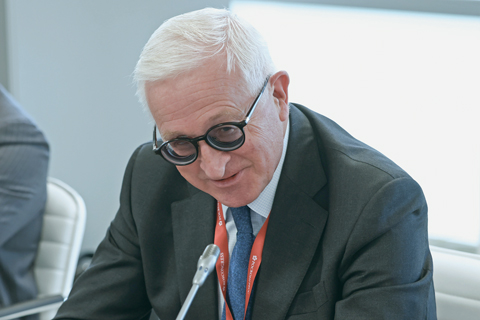
‘We continue to see risks to investment-led growth,’ Alexander Shokhin, head of the Russian Union of Industrialists and Entrepreneurs, said at the meeting. ‘Our May survey showed deteriorating assessments of demand, while payment arrears remain a problem. There is a risk that the current investment pause could turn into a prolonged investment freeze, so it is important to discuss how to prevent that.’ According to Shokhin, businesses would welcome an exchange rate of 80-85 roubles to the dollar.
Notably, none of the participants raised concerns about inflation risks associated with a weaker currency. Putin, meanwhile, said in his opening remarks that inflation in Russia was falling.
The first clear signs of a shift in Central Bank policy appeared at the end of 2024, the author argues. At the time, Shokhin accurately predicted that the regulator would halt further rate increases and effectively freeze the key rate at 21% until at least April 2025. According to the article, the decision reflected arguments made by business leaders during a meeting with Putin, where they warned that borrowing costs had become prohibitively expensive for investment. Shokhin also correctly anticipated the Central Bank’s subsequent moves, predicting a series of symbolic rate cuts of half a percentage point at each board meeting.