Russia has issued almost half a million work permits to foreign highly skilled specialists over the past 15 years. Nearly 80,000 such workers were recruited last year alone. Yet despite the steady inflow, few appear interested in building long-term careers in the country, even though Russian officials have repeatedly argued that attracting tens of thousands of highly qualified professionals is essential for the country’s economic modernisation.
The Russian authorities have long stressed the importance of attracting highly skilled foreign workers. In 2024, President Vladimir Putin instructed the government to expand the use of electronic visas and introduce additional measures to encourage leading researchers and specialists, including foreigners, to work in Russia.
Following a meeting of the Presidential Council for Science and Education, the Kremlin instructed the government to develop measures to attract leading researchers and specialists to scientific research and development projects in Russia. These measures included providing favourable conditions for specialists and their families, such as housing, simplified entry and work permit procedures, and broader access to electronic visas.
For 2026, the government approved a quota of 279,000 work permits for foreign nationals from visa-requiring countries, around 19% higher than the previous year.
More than 75,000 work permits were issued specifically to highly skilled foreign specialists in 2025, up 33% from a year earlier, according to the Interior Ministry. Rosstat estimates that Russia employed 90,700 highly skilled foreign specialists last year. Data from the Federal Tax Service show that more than 63,500 highly skilled specialists earned income under employment or civil contracts in 2023, rising to more than 76,200 in 2024.
Overall, since the highly skilled migration programme was launched 15 years ago, Russia has issued 477,000 work permits under the scheme, including more than 69,000 in 2025 alone.
Overall, since the highly skilled migration programme was launched 15 years ago, Russia has issued 477,000 work permits under the scheme, including more than 69,000 in 2025 alone.
Russian law defines a highly skilled specialist as someone with recognised experience, skills or achievements in a particular field. Employers must also meet minimum salary thresholds. Currently, highly skilled specialists must earn at least RUB 750,000 ($9,500) per quarter, while researchers and university lecturers must receive at least RUB 83,500 ($1,050) per month.
Despite these figures, highly skilled specialists still account for only a small share of Russia’s foreign workforce. Between 2010 and 2025, authorities issued a total of 7.9 million work permits and 26.2 million labour patents, or 34.1 million work authorisations overall. Even in the programme’s strongest year, 2025, highly skilled specialists accounted for only 3% of all work authorisations issued, notes Yulia Florinskaya, a senior researcher at the Presidential Academy’s Institute for Social Analysis and Forecasting.
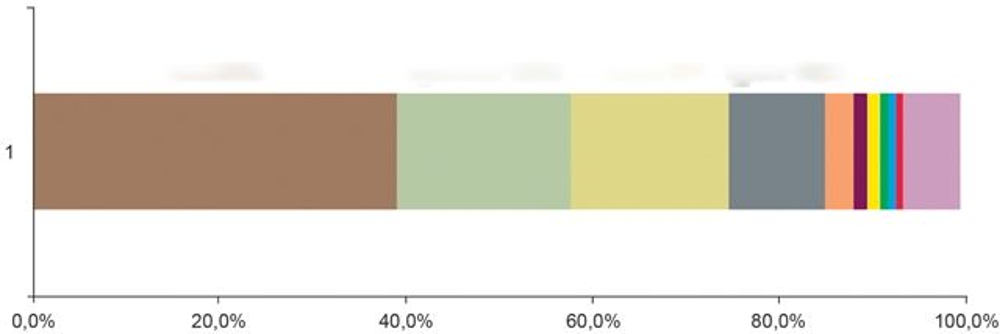
| Страны-доноры высококвалифицированной миграции в Россию (по числу оформленных РНР для ВКС), 2025 г. | Countries supplying highly skilled migrants to Russia (share of work permits issued to highly skilled specialists, 2025) |
| 1. Китай; 2. Туркмения; 3. Индия; 4.Турция; 5.Узбекистан; 6. страны ЕС; 7. Таиланд; 8.Вьетнам; 9. Республика Корея; 10. Сербия; 11. другие страны | 1. China; 2. Turkmenistan; 3. India; 4. Turkey; 5. Uzbekistan; 6. EU countries; 7. Thailand; 8. Vietnam; 9. South Korea; 10. Serbia; 11. Other countries |
Source: Presidential Academy
Despite their relatively small numbers, highly skilled specialists make a disproportionate contribution to public finances. According to the Federal Tax Service, they paid more than RUB 81 bln in personal income tax between 2022 and 2024.
Researchers highlight the contrast between their numbers and their tax contribution. In 2022, highly skilled specialists accounted for just 1.6% of all foreign workers receiving work authorisations but generated 27.7% of the income tax paid by that group. By 2024, their share of work permits had risen to 2.4%, while they still contributed 24.3% of total tax receipts.
Today, Asian countries have become the main source of highly skilled migration to Russia. According to Florinskaya, more than 94% of participants in the programme have come from visa-requiring countries. China has consistently been the leading source country. Chinese nationals accounted for more than 20% of all highly skilled specialists until 2016, but by 2025 their share had climbed to 39%.
Other leading source countries include Turkmenistan, India and Turkey. Researchers also note a sharp rise in specialists arriving from Uzbekistan, whose share exceeded 3% in 2025 after remaining below 1% the previous year.
The opposite trend has affected Europe. Before 2014, specialists from EU countries collectively accounted for almost 30% of highly skilled migrants to Russia. By 2025, that figure had fallen to just 1.4%.
Most highly skilled specialists continue to work in Moscow and St Petersburg, which together accounted for around 60% of them in 2012. However, Florinskaya says this pattern is gradually changing. The share of highly skilled specialists in the Moscow and Leningrad regions has declined, while Murmansk, Kaluga, Penza and Buryatia have dropped out of the leading destinations. At the same time, Russia’s Far East has attracted growing numbers of specialists, particularly in Zabaykalsky Krai, Khabarovsk Krai, Chukotka and the Amur region. Researchers link this shift to the growing inflow of Chinese professionals.
Despite the increase in arrivals, Russia has struggled to persuade highly skilled specialists to settle permanently. Although the programme offers a simplified path to legal residence, few participants make use of it. Florinskaya notes that demand for long-term integration remains weak. Between 2010 and 2017, only 3,400 highly skilled specialists and their family members applied for permanent residence permits, less than 2% of the total number entering under the programme. According to Presidential Academy, more recent figures tell a similar story: each year only a few hundred specialists apply for permanent residence despite tens of thousands receiving work permits.
Experts say this is unsurprising. Oleg Nikolayev of the Stolypin Institute for Growth Economics argues that Russia’s programme, often informally described as a ‘race for brains’, can only succeed if the country offers a fast-growing and technologically advanced economy capable of competing globally for talent.
Instead, he says, almost half of today’s highly skilled specialists are Chinese nationals working primarily for Chinese-owned companies. Turkmen nationals make up the next largest group, largely because many study in Russian universities and remain after graduation. Indian and Turkish specialists are also mainly linked to investment projects from their home countries.
Another problem, says Vladimir Vinogradov, chief executive of Pro-Vision Communications, is the definition of ‘highly skilled’.
‘For the migration authorities, that can mean anyone with a university diploma and a clean criminal record. For employers, it means a scarce engineer or an IT architect,’ he says. ‘On paper, we appear to be attracting brains from countries like India, but many of those workers are actually filling routine operational positions. Genuine industry stars still have to be recruited individually, often with personal guarantees from company executives.’
Vinogradov believes many highly qualified professionals ultimately leave because they cannot plan their future in Russia
.’A top specialist thinks in terms of projects lasting three to five years. Russia offers them a game of guessing tomorrow’s exchange rate and political agenda,’ he says.
Alexei Chikhachev, managing partner at recruitment agency A2, argues that attracting experienced professionals requires more than competitive salaries.
‘Highly skilled specialists aged between 30 and 45 almost always relocate with their families,’ he says. ‘Then the questions begin: English-language schools for their children, employment opportunities for their spouse, access to quality healthcare, and a clear route to permanent residence and citizenship. Negotiations with strong candidates often break down not over salary but over these practical issues.’
Competition for talent has also intensified globally.
‘An Indian or Chinese engineer today is not choosing between Russia and home,’ Chikhachev says. ‘They’re choosing between Russia, Singapore, the Middle East and Southeast Asia. Russia is objectively at a disadvantage. Dollar-denominated earnings have become less attractive after the rouble’s depreciation, the language is difficult, the climate is harsh, and there is very little infrastructure for expatriates outside Moscow and St Petersburg, such as international schools, English-speaking communities and support networks.’
There is also a reputational dimension.
‘A highly qualified specialist plans their career over the next 10 to 20 years,’ Chikhachev says. ‘They ask whether having “worked in Russia” will strengthen their CV on the global market or weaken it. Many conclude they will spend two or three years here to earn money and then leave. That’s why Russia continues to attract specialists but struggles to persuade them to put down roots.’
ORIGINAL: NG/Highly Skilled Migrants Are Reluctant to Stay in Russia