

Russian consumers spent 13% more on used cars in the first half of the year than during the same period in 2025. The primary reason behind the trend is that Russians bought more second-hand vehicles, with unit sales rising by almost 6% year on year. Currently, for every new car purchased, nearly five used ones change hands. Higher prices on the secondary market also contributed to the increase in overall spending. Used-car prices traditionally follow those in the new-car market, since prices rise first for new vehicles and then for older ones. Yet, even after these increases used cars remain more affordable. In some cases, Russian motorists seeking familiar foreign brands have no alternative but to buy second-hand. The shift in demand towards used cars is an indicator of declining living standards.
Russians spent RUB 3.4 trln on used cars in the first half of the year, 13% more than in the same period last year, as reported in a joint study by Gazprombank Autoleasing and the Autostat analytical agency
Figures for June cited in the study show that within the financial capacity the share of spending accounted for by relatively new cars, meaning used vehicles aged up to five years, has fallen from 30% to almost 25% over the year. The share of vehicles aged between five and nine years jumped from 31% to about 35%, while the share of cars aged 10 years or more increased from 39% to 41%.
The study defines the financial capacity as the total amount Russians spent on used passenger cars during the reporting period.
In terms of sales volumes, older vehicles aged 10 years or more are firmly in the lead, accounting for 70% of the secondary market.
By country of origin, Russians spent the most on used European marques, which accounted for about 33% of total expenditure in June. Japanese brands ranked second with a 31% share, followed by South Korean vehicles at 13%. They were followed by used Chinese cars at about 10%, Russian vehicles at almost 9% and American brands at less than 5%.
The ranking changes significantly when demand is measured by the number of vehicles sold rather than by value. Japanese brands then take first place followed by used Russian cars and European vehicles. South Korean and American brands come next, with Chinese cars at the bottom of the ranking.
The amount spent on any product depends directly on the price and its variations. For instance, the overall increase in Russian spending on used cars may reflect their higher prices. Experts interviewed by the newspaper confirmed this trend.
‘Both new and used cars have become more expensive in recent years. The secondary market traditionally follows the primary one. So, when new cars become less affordable, demand for used vehicles rises, supporting their prices,’ said Maria Yermilova, associate professor at Plekhanov Russian University of Economics.
‘Used-car prices broadly reflect conditions in the new-car market. The average price of a used passenger car has climbed 5% since the beginning of the year, while prices in the used-car segment could rise up to 10% over the full year. The main reasons include lower sales volumes and rising prices in the new-car market following a higher recycling fee and value added tax, exchange-rate volatility and inflation,’ said Alexander Kornev, department head at Gazprombank Autoleasing.
However, spending on used cars has also increased because Russians are indeed buying more of them. According to Autostat agency, Russian motorists purchased nearly 2.9 mln used passenger cars in the first half of the year, which is 5.5% more than in the same period last year.
Alexander Kornev told Nezavisimaya Gazeta that Russia’s used passenger-car market has recorded uninterrupted year-on-year growth since July 2025. Whereas since April this year, monthly used-car sales have remained above 500,000 vehicles.
Meanwhile, official statistics show that Russians bought about 609,000 new vehicles during the first half of the year, which is much fewer than used ones. The market is clearly skewed towards older cars.
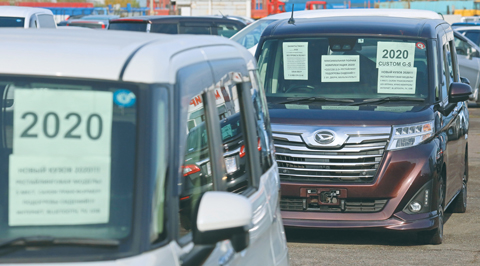
However, Autostat explained to Nezavisimaya Gazeta, that purchases of used cars have historically outweighed new car sales, and this is not in itself remarkable. More important is the ratio between these categories. Almost five used cars are currently purchased for every new vehicle.
The agency said this was close to last year’s level. In 2020, 2021 and 2024, the used-car market was four times the size of the new-car market. The greatest imbalance was recorded in 2022, when about eight used vehicles were purchased for every new car, Autostat reminded.
The agency also noted that the new-car market is currently growing faster than the used-car market. Sales of new passenger cars rose by almost 15% in volume during the first half of the year compared with the same period in 2025. Yet, this has done little to suspend the ageing of the country’s overall vehicle fleet so far.
The main reason consumers choose used cars is the declined affordability of new vehicles. ‘Several factors have contributed at the same time, including high interest rates on car loans, rising new-car prices resulting from inflation, logistics costs, currency fluctuations and changes of the import structure, and a reduced range of brands familiar to buyers,’ Yermilova said. For many families, buying a car remains a necessity, but their budgets are no longer sufficient to afford a new vehicle. So, the secondary market has come to represent the most rational alternative.
The increase in demand for used cars in the current environment is primarily due to consumers’ inability to buy new vehicles made by global manufacturers that have withdrawn from the Russian market, added Andrei Grishakov, a department director at Avtodom and AvtoSpetsTsentr.
‘Cars arriving through parallel-import channels become so much more expensive after all the necessary customs charges have been paid that many people can no longer afford them, particularly given high borrowing rates,’ Grishakov said. Consumers generally purchase cars on loans.
The ongoing shift in demand towards used cars is making such purchases increasingly risky. ‘There are fewer high-quality cars aged three to five years, while demand for them remains strong, further deepening the imbalance. This is creating a shortage of readily marketable vehicles, particularly those aged three to five years. Buyers have less choice, less bargaining power and prices for good units remain stable or continue climbing. The risks of buying a car with hidden defects, altered mileage, legal restrictions or a disputed ownership history are increasing,’ warned Dmitry Baranov, a leading expert at Finam Management. As a result, Russia’s vehicle fleet is being renewed more slowly while ageing more rapidly, pushing up the average age of cars on the road. This is likely to increase motorists’ spending on repairs, replacement parts and servicing, while also weighing on the vehicles’ environmental and operating performance.
ORIGINAL: NG/Russians Spend Trillions of Roubles on Used Cars