Inflation as experienced by ordinary consumers has turned out to be roughly three times higher than the official figure reported by Rosstat and the Ministry of Economic Development of Russia. In addition, consumer expectations differ sharply from the forecasts of the government and the Central Bank of Russia. A key factor is the steep rise in tariffs, which is reshaping household spending plans for the coming year. And although officials and financial authorities frequently criticise the public for taking what they describe as a subjective view of prices, arguing for example that neighbourhood shops do not reflect national trends and that consumers lack sufficient expertise to make forecasts, the Central Bank continues to monitor citizens’ subjective assessments.
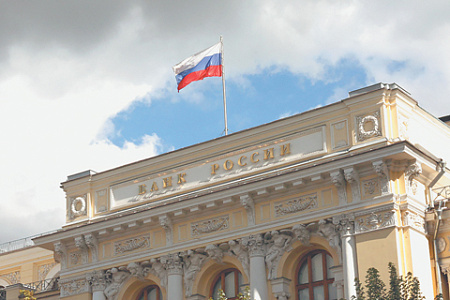
The Central Bank’s next meeting on the key interest rate is scheduled for June 19. Much can happen within a month, but based on current trends, analysts believe the meeting will mainly serve a communicative function, aimed at comparing assessments rather than delivering any major policy shift.
According to Olga Belenkaya, head of research at Finam, the regulator could face several options by June: leaving rates unchanged, cutting the key rate by 50 basis points, or beginning a more gradual easing cycle with a 25 basis-point reduction. In other words, the key rate would either remain at its current level of 14.5% or fall to 14–14.25%.
At the same time, according to Ilya Fedorov, chief economist at BCS World of Investments, it no longer matters greatly for the annual average rate whether the Central Bank cuts by 25 or 50 basis points in June. Either move would effectively amount to standing still.
Meanwhile, analysts at the financial Telegram channel MMI argue that the latest inflation assessments from households are becoming ‘the strongest indicator of the need for a pause in the monetary policy easing cycle’.
Surveys conducted by the Public Opinion Foundation, or Public Opinion Foundation, on behalf of the Central Bank among around 2,000 respondents aged over 18 in 54 Russian regions showed that perceived annual inflation rose sharply from 14.6% in April to 15.1% in May.
This figure reflects the actual price growth respondents say they experienced over the previous 12 months. FOM uses the median value after analysing all responses, meaning the level above and below which exactly half the sample falls.
As a result, inflation as perceived by consumers was roughly three times higher than the official rate. According to the Ministry of Economic Development, annual inflation stood at 5.6% at the end of April.
At the same time, inflation expectations among the population changed little and remained elevated. According to FOM, inflation expectations in May stood at 13%, compared with 12.9% in April. These figures reflect respondents’ forecasts for price growth over the coming 12 months and are again expressed as a median value.
Such expectations also far exceed official projections. Last week, the Ministry of Economic Development published an updated forecast for 2026 together with scenario assumptions for 2027–2029.
The ministry forecasts annual inflation of 5.2% by the end of 2026. From 2027 onwards, inflation is expected to fall to 4% and remain at the target level for several years.
However, as Nezavisimaya Gazeta previously reported, there are serious doubts about whether such targets are achievable, primarily because of tariffs charged by natural monopolies, which the government has decided will continue to rise faster than inflation every year despite broader economic conditions.
For example, wholesale gas prices for all categories of consumers are set to rise by more than 9% in 2027, followed by 7% increases in both 2028 and 2029. Electricity transmission tariffs for households are expected to rise by more than 15% in 2027, while tariffs for other consumers will increase by 13%. In 2028, household tariffs are projected to rise by around 11%, while tariffs for other users will increase by almost 9%. In 2029, tariff indexation for all consumer categories is expected to exceed 6%.
According to calculations by MMI analysts, over the full forecast period from 2026 to 2029, prices for housing and utility services as a whole will rise by more than 41%, while total household utility payments will increase by around 36%.
Rapid tariff growth is an issue previously highlighted by the Central Bank itself.
‘People look at the jump in housing and utility prices and extrapolate this to a wider range of goods prices and future decisions,’ Central Bank Governor Elvira Nabiullina has said.
Expectations of further sharp tariff increases are directly fuelling inflation expectations more broadly, even at a time when official inflation figures in government reports are moving in the opposite direction.