

Household consumption in Russia should no longer be viewed merely as an element of social policy or an indicator of public well-being, but as a key engine of economic growth. That is the conclusion reached by researchers at the Higher School of Economics (HSE) following a recent policy seminar. The idea itself is hardly new, but it is now being framed in a different context. Whereas domestic demand was previously seen as a substitute for weakening exports, attention has now shifted to the potential of the platform economy, which is creating an increasingly powerful circulation of money by offering people more opportunities both to earn and to spend. At the same time, another HSE study suggests that relying on domestic demand is not always an effective growth strategy, citing the example of China.
A group of economists has called for Russia’s socioeconomic policy to be revised with greater emphasis on household consumption and domestic demand. Their recommendations were presented at an HSE academic seminar, the main conclusions of which were published by the university’s HSE Daily portal.
‘Household consumption should be regarded not as an element of social policy or a sociological measure of satisfaction, but as a driver of economic development,’ said HSE Academic Supervisor Yaroslav Kuzminov. In other words, rather than government policies being designed to support consumption through broad social programmes, consumption itself should become the force supporting economic growth.
Judging by Kuzminov’s remarks, this could also justify narrowing social support programmes. He argued in favour of shifting towards targeted assistance for specific groups while abandoning what he described as the ‘mandatory provision of support.’
In practice, Russia’s fiscal authorities have already been moving in that direction, attempting to balance budgetary constraints with electoral considerations. One recent example is the effort to tighten eligibility for the subsidised family mortgage programme
The first reason for reconsidering the role of household consumption is Russia’s gradual departure from an export-oriented economic model, although this argument has been made before.
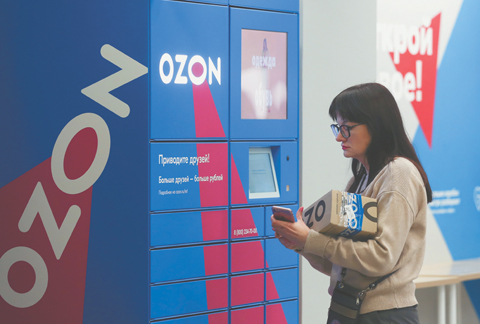
The new element is the emergence of the platform economy. On the one hand, digital platforms create additional opportunities for people to earn money; on the other, they make it easier to spend it. Together, these developments reinforce domestic demand.
Digital platforms are reshaping retail, services and the labour market. According to figures previously cited by the government, transactions conducted through marketplaces and online platforms now account for more than 5% of Russia’s GDP.
These platforms include not only online retailers but also digital marketplaces that connect customers with service providers. A new form of employment is emerging: government estimates suggest that around 16% of Russians now work through digital platforms either regularly or occasionally.
Occasional platform work does not necessarily provide a stable source of income, HSE Institute for Social Policy Deputy Director Oksana Sinyavskaya noted during the seminar. Nevertheless, most experts believe that the platform economy is becoming an important source of additional household income, much of which is not yet fully reflected in official statistics.
Analysts interviewed by Nezavisimaya Gazeta agreed that digital platforms contribute to domestic consumption as an economic driver. They most often pointed to factors stimulating consumer activity: lower transaction costs, a wider selection of goods, easier comparison of price and quality, loyalty programmes, and the reduction of geographical barriers and regional disparities, particularly in remote areas. Businesses also benefit from expanded opportunities for development.
The central contradiction, however, is that household consumption is simultaneously being restrained by both the government’s tax policy and the Central Bank’s monetary policy.
The impact of high interest rates on consumer demand and lending has already been widely discussed, so participants at the HSE seminar focused primarily on taxation.
The most significant recent tax change directly affecting households is the increase in the value-added tax (VAT) rate from 20% to 22%.
Reduced VAT rates of 10% remain in place for socially significant goods and services, including food products, children’s goods, medical products and domestic air travel, while certain categories continue to be taxed at a zero rate.
Even with these exemptions, however, ‘the VAT increase is expected to reduce households’ purchasing power,’ according to a report by HSE Development Centre economists Natalya Akindinova, Svetlana Misikhina and Andrei Chernyavsky.
‘Higher-income households will be able to offset these losses by reducing their savings. Lower-income groups are partially protected by reduced VAT rates, but the cost of their consumer basket is still expected to rise by around 1.1%, leading to a real decline in consumption,’ the economists wrote
They also warned that the main economic consequence of the VAT increase could be ‘a further slowdown in economic activity, weaker aggregate demand, and the expansion of the shadow economy among small businesses.’
To this can be added the fact that Russian consumers already bear much of the burden of rising costs, from regulated utility tariffs to higher producer and supplier margins. In practice, households are already supporting many sectors of the economy, including some that remain relatively inefficient.
‘Households have long become the main source of income for both the state budget and businesses. Rising tariffs for natural monopolies, indirect taxes such as excise duties and VAT, and manufacturers’ desire to preserve profit margins at any cost all ultimately fall on consumers,’ Linda Ryzhikh, an expert at the Presidential Academy, told Nezavisimaya Gazeta. ‘Consumers are effectively subsidising inefficient industries because they often have no alternative. Someone buying a domestically produced car or construction materials, for example, is frequently paying extra for the manufacturer’s technological backwardness, which is concealed by high import tariffs or the exchange rate.’
The question of what should serve as a reliable engine of economic growth is not unique to Russia. China’s experience is particularly revealing and, according to another HSE study, somewhat unexpected.
Researchers Inna Lola and Dmitry Asoskov of HSE’s Institute for Statistical Studies and Economics of Knowledge set out to determine whether China had successfully shifted away from an export-led growth model towards one driven by domestic demand and innovation.
They conducted a quantitative analysis of China’s growth drivers, including exports, domestic demand and innovation.
The analysis was based on economic data from 29 provinces covering the period from 2001 to 2024 and included comparing the periods before and after 2012, when Xi Jinping came to power.
The findings, presented in a paper titled Analysis of the Transformation of Chinese Economic Growth in the Xi Era, surprised even the authors, particularly given Beijing’s repeated declarations about reducing dependence on foreign markets.
According to the study, China’s average annual growth slowed from 13.9% during 2000–2012 to 5% in 2025.
The researchers found that throughout 2013–2024 exports remained the principal driver of China’s economy. Indeed, their importance increased further even as the contribution of domestic demand weakened. Household consumption lost its leading position among the country’s growth drivers during that decade.
The HSE researchers argue that without export demand China’s economic slowdown would have been even more pronounced.
At the same time, spending on research and development increased significantly, reinforcing innovation as one of the most important long-term drivers of economic growth.
According to the HSE authors, the main lesson for Russia is that its ‘pivot to the East’ should be diversified rather than centred exclusively on China. ‘Economic partnership with China should be based not on the illusion of endless growth but on a clear understanding of its limitations and vulnerabilities,’ they conclude.
Analysts interviewed by Nezavisimaya Gazeta drew a broader lesson for Russia from China’s experience concerning the country’s future growth model.
‘China’s experience shows that domestic demand alone does not guarantee sustainable growth,’ said Yaroslav Kabakov, Strategy Director at Finam. ‘For Russia, the conclusion is obvious: economic growth must rely not on consumption or commodity exports separately, but on a combination of domestic demand, investment, productivity growth and the development of competitive non-resource exports.’
‘Even China, with its enormous domestic market, ultimately continues to rely on exports to drive economic growth,’ added Natalya Natocheyeva, Professor at Plekhanov Russian University of Economics. ‘Russia’s population is much smaller and its effective consumer demand is far weaker than China’s. Relying solely on domestic consumption as the foundation for long-term economic development would therefore be unrealistic.’
To raise Russia’s economy to a globally competitive level, she argued, the country must first shift exports away from raw materials towards manufactured goods, a trend that is already beginning to emerge. Second, it must restructure logistics chains and expand the use of trade finance to avoid constraining exports. Third, it needs to make much broader use of innovation as a source of international competitiveness.
At the same time, Natocheyeva said, the domestic market should be utilised to its full capacity, including as a testing ground for products intended for export, while sanctions should be viewed as an incentive to develop domestic technologies and manufacturing capabilities.
ORIGINAL:NG/Russian Consumers Expected to Pull the Economy Forward