According to the government, around 400,000 international students are currently enrolled in Russia’s higher education system, accounting for approximately 8% of all students nationwide. A survey conducted by NG found that the share of foreign students varies significantly between institutions, ranging from 1% to 14%. Young people come to Russia from China, India, Africa, the Middle East and CIS countries to pursue higher education. Individual universities show clear country-specific preferences: African students at some institutions tend to choose programmes related to energy, infrastructure and digital technologies, while at others they favour agricultural studies. Students from Central Asia gravitate either towards construction and transport or towards industrial cooperation and economics.
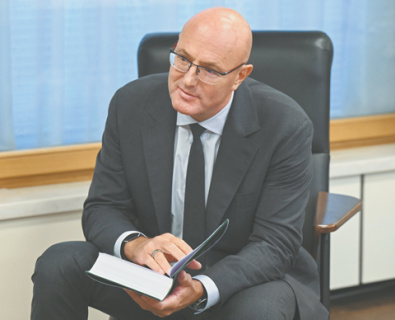
‘Russian education is highly popular around the world… Today we already have more than 400,000 students from 180 countries studying here,’ Deputy Prime Minister Dmitry Chernyshenko told TASS.According to the Ministry of Science and Higher Education, more than 4.8 million students are enrolled in higher education institutions, including those admitted during the 2025/26 academic year. This means that foreign students account for around 8% of the total
International applicants may enrol in Russian universities through government-funded quotas. Since 2023, the annual quota for foreign students admitted to tuition-free places has stood at 30,000.
Citizens of Armenia, Belarus, Kazakhstan, Kyrgyzstan, Moldova and Tajikistan may apply to Russian universities on the same basis as Russian citizens. Talented students from abroad who are unable to pay for tuition and living expenses can receive grant support. This year, 3,000 students are eligible for such grants, with the figure expected to rise to 5,000 by 2028.
At the same time, President Vladimir Putin has set a target for Russia’s higher education system to increase the number of international students to 500,000 by 2030.
The situation regarding recruitment and distribution of foreign students across disciplines varies depending on the region and the profile of individual institutions. Nezavisimaya Gazeta’s survey found that the proportion of international students currently ranges from 1% to 14% across different universities.
Oleg Sulitsa, First Vice-Rector of Vitus Bering Kamchatka State University (KamSU), told Nezavisimaya Gazeta that the university currently has 16 international students from China, India, Syria, Uzbekistan, Tajikistan and Kyrgyzstan. Among them are 10 undergraduate students, five master’s students and one student enrolled in a vocational education programme.
The trend has been stable.
‘In October 2023 there were 11 international students, all from Uzbekistan and Kyrgyzstan, and almost all were undergraduates. By October 2024 the total remained at 11, but the geographical composition had changed: students from China appeared and the first master’s students enrolled. By October 2025 the number had increased to 19. The current figure of 16 reflects the present situation after the normal attrition that occurs during the academic year,’ Sulitsa said.
The university has around 1,800 students in total, meaning international students account for roughly 1%.
At KamSU, foreign undergraduates choose programmes in applied informatics, linguistics with a focus on intercultural communication and foreign languages, teacher training in English, French and information technologies, as well as law. Master’s students study biology, specialising in biodiversity and biological resources, and volcanology and seismology, a programme taught in both Russian and English. One vocational student chose tourism and hospitality.
Ekaterina Lyutik, Head of International Relations at St Petersburg State University of Veterinary Medicine, told Nezavisimaya Gazeta that the institution currently has more than 210 international students.
The increase has been substantial. As recently as 2024, there were only 11 international students enrolled in degree programmes and another 70 attending the preparatory department. The university has around 3,000 students in total, including postgraduate researchers. International students therefore now account for approximately 7% of enrolment.
The main countries of origin are India, China, Morocco, Tunisia, Algeria and other African states. Many students from Central Africa study under Russian government scholarship programmes.
Given the university’s profile, veterinary medicine is by far the most popular field.
‘Three years ago we launched an English-language veterinary medicine programme. It has proved particularly popular among Indian students. We also offer veterinary and sanitary expertise, aquaculture and biology. We should also mention the preparatory department, which serves as a foundation year where international students learn Russian and, from the second semester, study chemistry, physics and biology,’ Lyutik explained.
According to Yulia Davydova, Vice-Rector for International Affairs at Moscow Polytechnic University, the institution currently has more than 2,000 international students from 79 countries, representing 8.5% of total enrolment. They come from South and Central Asia, Africa and the Middle East.
Demand for specific disciplines is strongly influenced by region of origin.
Students from South Asia tend to favour engineering, IT, agricultural technologies, logistics and entrepreneurship. Students from Central Asia are more interested in construction, transport and industrial cooperation. African students focus on energy, infrastructure and digital technologies. Applicants from the Middle East are interested in sustainable development technologies and urban infrastructure,’ Davydova said.
International students are also actively involved in the university’s product-oriented schools, which offer training in fields ranging from autonomous transport systems and robotics to the gaming industry and AI animation.
Svetlana Matveyeva, Head of International Cooperation at Kazan State Agrarian University, provided Nezavisimaya Gazeta with figures showing that as of October 1, 2025, the university had 905 international students from 47 countries, accounting for almost 14% of total enrolment. A year earlier the share had been 9%.
Most students come from CIS countries, particularly Turkmenistan, Tajikistan and Uzbekistan. Africa is also strongly represented, especially Cameroon, Algeria and the Republic of the Congo. The university also enrols students from the Middle East, Asia and Latin America.
The most popular areas of study are veterinary medicine, agronomy and economics. Agronomy traditionally attracts students from CIS countries and Africa, while economics is primarily chosen by students from neighbouring states, Matveyeva said. The preparatory faculty also plays an important role, helping international students learn Russian and complete foundation courses before entering degree programmes. From September 2026, demand is expected to shift towards new English-language programmes in veterinary medicine and economics aimed primarily at students from outside the former Soviet Union.
Experts identified several key tools used by Russian universities to attract international students: launching English-language degree programmes, opening overseas pre-university training centres, systematic cooperation with recruitment agencies and developing network-based educational formats and joint programmes with foreign universities. Under these arrangements, students may spend their first year studying in their home country under a Russian university curriculum while learning Russian, before transferring to Russia from their second year onwards.
ORIGINAL: NG/Russian Universities Attract More Students from Abroad