Dmitry Loboyko Political scientist and head of the Regional Studies Centre
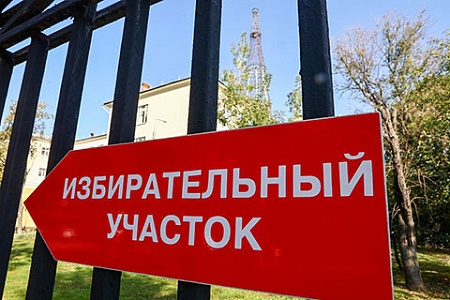
In three and a half months, elections to the State Duma will take place in Russia. Two out of three Russians are unaware of this. Among people under 25, the figure rises to three out of four. At the same time, United Russia has just completed its primaries with 12 candidates competing for each place, Dmitry Medvedev has ceremonially summed up the results at a meeting of the party’s supreme council bureau, and the congress to nominate candidates has been scheduled for June 28. The political machine is operating at full capacity in a space from which most of the population is physically absent. This is not apathy. It is anaesthesia.
Russian abstentionism, the mass avoidance of participation in elections or referendums, has three layers, none of them accidental
The first is structural and has developed over two decades. Once genuine uncertainty over election outcomes was systematically removed, it became rational not to waste time participating. People stop voting for the same reason they stop watching a match when they already know the final score.
The second layer is situational. A May survey by the Levada Centre, designated a foreign agent in Russia, found that one in four Russians experiences tension, irritation or fear, with the share rising by four percentage points over The third layer is institutional. The reasons cited by those who refuse to vote are straightforward: ‘it will change nothing’, ‘I do not believe the process is fair’, ‘there are no worthy candidates’. This is not abstract fatigue but a direct verdict on the procedure itself. In May, the Levada Centre found that only half of respondents intended to vote, while one in five remained undecided.the month. People want ‘not to think about it’. In such an atmosphere, the parliamentary campaign is perceived as background noise.
The contrast with global trends is particularly striking. In the United States, voter turnout in the 2020 and 2024 presidential elections was among the two highest levels recorded in the past century. Researchers at Pew Research directly linked this increase to growing political polarisation. In the European Union, turnout in the 2024 European Parliament elections reached its highest level in 30 years. Polarisation, however toxic, functions as a mobilisation mechanism: people vote because they believe the outcome depends on them and because they fear the victory of their political opponents. Russia is moving in precisely the opposite direction. The systematic removal of any meaningful alternative from public politics produces not stability but political anaesthesia. No competition means no mobilisation, and no mobilisation means no turnout
The system, however, does not appear to view low turnout as a problem. If anything, it regards it as a normal operating mode. According to sources in regional administrations in at least five federal subjects and officials from the ruling party in two regions whom I spoke to over the past month, regional authorities were tasked with registering at least 15% of voters for remote electronic voting through Gosuslugi, not only for the primaries but also for the September elections. The target was not met everywhere, but the mechanism itself is revealing. Civil servants and municipal employees were given a simple formula: register yourself and recruit two others. With overall turnout expected to be around 50%, an administratively assembled pool equal to 15% of registered voters would account for roughly 30% of all votes cast. This is an electorate created by administrative leverage rather than political choice. The key issue is not the loyalty of this group but the fact that enough citizens are registered on the platform. How they actually vote is impossible to verify. Transparency during the primaries was supposedly ensured through the division of encryption keys among designated custodians, including Senator Alexander Karelin and Rostelecom chief executive Mikhail Oseyevsky. Independent observation does not exist. The system does not overcome mass abstentionism. It bypasses it.
Following the completion of the primaries, 201 of the 312 incumbent United Russia deputies may seek re-election. At various levels, 480 participants in the special military operation won victories. Twenty thousand participants and a ratio of 12 candidates per seat demonstrate vitality directed inward at the system itself rather than outward toward society.
The arithmetic is simple. To secure a constitutional majority, United Russia needs 300 of the 450 seats in the State Duma. With managed turnout, an administratively assembled electronic voting pool and a non-transparent platform, this objective appears achievable under almost any scenario. The result is predetermined. The real question lies elsewhere.
Absinthe, the famous anise-flavoured ‘green fairy’, is known not for intoxication but for the hangover that follows. Anaesthesia ends, and the pain returns. With interest. Abstentionism in politics works the same way. The system will obtain the result it wants, but it will not obtain legitimacy. The two are not the same. When two-thirds of citizens do not know an election is taking place, when one in four openly says participation changes nothing, and when elections are viewed not as a mechanism of influence but as an administrative ritual, the legitimacy deficit does not disappear. It accumulates. Moreover, it accumulates not only in society at large but also within elite groups, where frustrations and unrealised ambitions develop their own momentum.
Elections without an electorate do not solve the problem of political participation. They preserve it. Without a channel through which dissatisfaction can be expressed, pressure does not dissipate. It seeks another outlet. What form that outlet will take, and when it will emerge, remains an open question. But the answer is not being shaped on election day in September. It is being formed already, in the silence that sociologists politely describe as abstentionism
ORIGINAL: NG/Political Hangover After Abstentionism