At a government meeting on Thursday, officials announced plans to consider amendments aimed at introducing measures to stabilise prices on the fuel and lubricants market. Meanwhile, the fuel situation in Russia continues to worsen. Retail petrol prices have risen by 24% over the past year, compared with overall inflation of 5.62%. Rising petrol prices are a concern for 60% of the population surveyed by sociologists. Regions are introducing various mechanisms to reduce queues at petrol stations.
It was reported that the government would consider amendments to a bill changing the Tax Code. RIA Novosti later reported that the measures had been approved.
Interfax, citing a source, reported that the government proposes paying a fuel subsidy for middle distillates for one year, as well as introducing payments for imported diesel fuel. These proposals are included in draft amendments to the Tax Code prepared by the Finance Ministry. The payments would apply from July 1, 2026, to June 30, 2027. The size of the subsidy would be set at the same level as for diesel fuel.
The government also proposes introducing a subsidy for imported diesel fuel, similar to the mechanism used for petrol. Payments would be made in months when bans on exports of both diesel fuel and kerosene were simultaneously in effect.
In addition, for diesel fuel imports from Belarus, the compensation coefficient would be increased to 0.9. For diesel imports from third countries, the export alternative would be calculated based on Indian market prices, taking into account delivery costs to Russian ports.
‘Introduce an “import subsidy” mechanism for imported diesel fuel from third countries, similar to that used for motor petrol, and increase the compensation coefficient to 0.9 for diesel fuel imported from Belarus, with payments made from the budget for the relevant month if an export ban on diesel fuel, kerosene and middle distillates was in effect in the previous month,’ Interfax quoted from the explanatory note prepared by the Ministry of Finance.
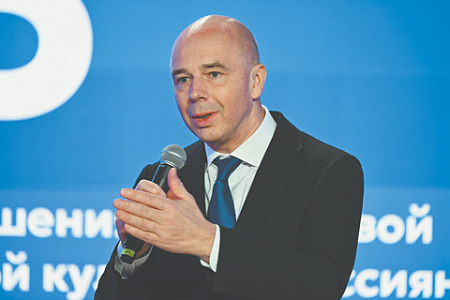
The ministry headed by Anton Siluanov also proposes allowing the government to determine cases when fuel sold outside the exchange system can be included in mandatory exchange sales requirements for petroleum products.
The current fuel crisis emerged after seasonal demand for petrol coincided with an increase in unplanned refinery repairs caused by drone attacks.
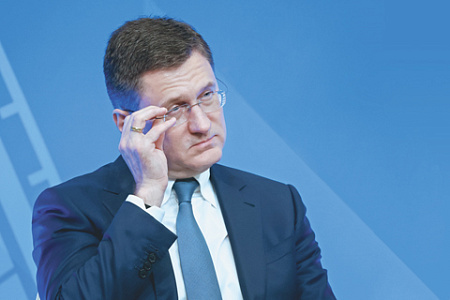
At a meeting chaired by President Vladimir Putin on July 8, Deputy Prime Minister Alexander Novak described the situation on the fuel market as difficult.
‘As a result of continuing terrorist attacks on civilian infrastructure, including fuel and energy facilities, several oil refineries were damaged. This led to a temporary partial reduction in petrol and diesel production,’ Novak said.
According to the deputy prime minister, the government and oil companies are taking measures to stabilise the market. He said that imports of petroleum products had begun. These supplies are intended to meet seasonal agricultural demand and ease shortages in certain regions, including Crimea and southern Russia, where particularly severe disruptions had been reported.
In recent months, Russian authorities have expanded restrictions aimed at stabilising the fuel market. In April, the government introduced a ban on petrol exports, effective until the end of July. A ban on aviation kerosene exports came into force on June 1. On July 8, Russia introduced a ban on diesel exports. The St Petersburg International Mercantile Exchange also limited price increases for all petroleum products, while mandatory exchange sales requirements were reduced from 15% to 10% for petrol and from 16% to 10% for diesel. The exchange system was adjusted so that fuel volumes sold through the exchange would go directly to end consumers, removing intermediaries from the supply chain, Novak said.
Authorities also increased refinery utilisation to maximum levels, shortened repair periods, postponed planned maintenance, released previously accumulated fuel reserves onto the market, and encouraged oil companies to sign more direct supply contracts with independent petrol stations. Seasonal fuel supply schedules for agricultural producers were approved as a priority, and northern deliveries remained under government control. Production of lower-grade fuel was also permitted.
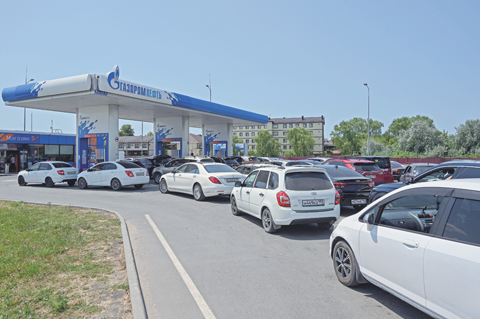
After the diesel export ban was introduced, Russia’s domestic market began receiving additional fuel supplies, Novak said.
‘All necessary volumes will be delivered to the regions to ensure harvesting operations by agricultural producers,’ he said.
Authorities also stressed that priority fuel supplies would be provided for transport carrying food products to retail chains in order to prevent fuel costs from feeding into consumer prices.
Meanwhile, the fuel situation in Russia remains tense. Despite government assurances that the situation is stabilising, sociological surveys show growing public concern about petrol prices. According to the Public Opinion Foundation (FOM), nearly 60% of Russians surveyed said petrol prices had risen over the past month. At the beginning of June, only 38% of respondents reported noticing higher fuel prices
Rising petrol prices are contributing significantly to consumer inflation. In the week from July 7 to July 13, petrol and diesel prices increased by 2.25% and 3.18%, respectively. A week earlier, retail prices rose by 2.1% and 3.4%. Over the year, petrol prices increased by 24.11%, compared with overall consumer inflation of 5.62%, according to the Ministry of Economy.
Rosstat data showed petrol prices changed in 78 Russian regions in the week from July 7 to July 13. While the average price of AI-95 petrol was RUB 78 per litre and diesel averaged RUB 91.21 per litre, prices were significantly higher in many regions. Problem areas included the Voronezh and Kostroma regions. In the North Caucasus republics and Tuva, average retail fuel prices exceeded RUB 100 per litre. The most difficult situation was reported in Crimea and Sevastopol, where average AI-95 and diesel prices exceeded RUB 200 per litre during the same week.
Russian production of petroleum products and coke fell by 13.5% year-on-year in May, according to Rosstat.
Media reports suggest that it is still too early to speak of full stabilisation. From July 15, the Kursk region introduced petrol sales based on vehicle registration numbers, Governor Alexander Khinshtein said on Thursday.
‘Following the decision of the operational headquarters, petrol stations in the Kursk region are operating under an odd-even system. This is primarily a security measure,’ he wrote on his channel in MAX. The regional governor explained that on odd-numbered days, vehicles with registration numbers beginning with odd digits can refuel, while on even-numbered days vehicles with plates beginning with 2, 4 and so on, including 0, are served.
From Thursday, fuel sales in Sevastopol began operating through QR codes, according to local authorities. The petrol limit for AI-92 was increased from 20 to 30 litres per vehicle, while four petrol stations began selling up to 40 litres per vehicle. In Crimea, unrestricted petrol sales were available at 41 petrol stations on Thursday.
Electronic queues using QR codes to automatically track fuel limits are also being tested in the Trans-Baikal Territory.
Authorities in Bashkortostan said the number of vehicles waiting at petrol stations was declining and that the fuel shortage had eased.
‘Petrol is available, although it may not always be AI-95, more often AI-92. Even judging by the tone of public complaints, people who yesterday and the day before yesterday were simply saying there was no petrol are now saying: “No, we don’t need AI-92, give us AI-95.” But AI-95 is more difficult to produce, and our priority today and tomorrow is simply to saturate the market with petrol. Then we will supply AI-95 and AI-100,’ said Oleg Tyshchenko, deputy minister of industry, energy and innovation of Bashkortostan, according to BFM. He said the improvement was linked to shorter queues. ‘At key petrol stations with 12–16 pumps, queues that previously had 150–180 cars have now fallen to 50–70,’ he said.
Meanwhile, the Krasnodar region has asked the federal government to increase fuel supply quotas for agricultural producers. ‘The situation (with petrol availability, Nezavisimaya Gazeta) is stabilising. Every day, at least one type of fuel is available at around 80% of petrol stations. However, the situation remains difficult in Novorossiysk, Gelendzhik, Anapa, Temryuk and Krymsk districts,’ said Krasnodar Governor Veniamin Kondratyev. Regional media also reported an increase in suburban rail passenger traffic. Over the past two weeks, passenger numbers have risen by 10.7%.
The Rostov region has proposed introducing a minimum petrol purchase limit of 10 litres and increasing the maximum limit to 40 litres. It has also suggested introducing sales on alternating even and odd days.
Meanwhile, media reports citing data from the Russiabase petrol station locator and fuel cards indicate that fuel availability has improved in 13 Russian regions. Queues have noticeably shortened in the Kaliningrad, Oryol, Bryansk, Irkutsk, Kaluga, Smolensk, Novgorod, Kurgan regions, as well as in Primorsky Krai, the Yamalo-Nenets Autonomous District, Kalmykia, Buryatia and the Komi Republic. The most difficult conditions remain in some regions of Central Russia, the Volga area and southern Russia.