Russia marks Entrepreneurs’ Day on May 26. On Monday, however, the government presented domestic businesses with another gift: a new subsidised lending programme with a total limit of RUB 150 bln. Experts welcomed the decision but argued that the current support measures remain insufficient.
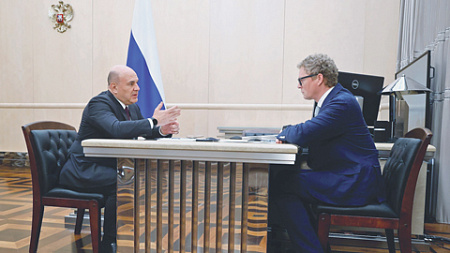
The small and medium-sized business sector is one of the country’s key drivers of innovation and a source of breakthrough ideas, Prime Minister Mikhail Mishustin said on Monday during a meeting with deputy prime ministers. The number of small and medium-sized enterprises (SMEs) is continuing to grow. ‘Today there are already 7 million entrepreneurs and more than 19 million people employed in the sector. The number of newly established companies is also increasing. As of May 1 this year, there were 1.5 million, which is 4.2% more than in the same period last year,’ Deputy Prime Minister Alexander Novak said.
According to Novak, the growth in SMEs is the result of systematic government efforts in recent years, including the national project ‘Small and Medium Entrepreneurship’. More than 5 million entrepreneurs have received support under the programme. Government officials stressed the importance of continuing to help Russian SMEs overcome current challenges and adapt more actively to the structural transformation of the economy.
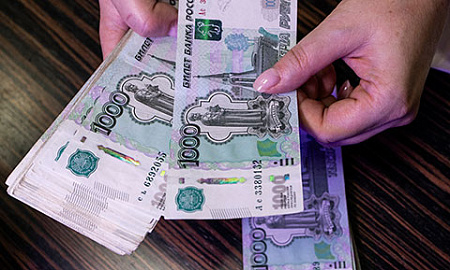
A wide range of support measures for SMEs is already in place. Beginning in July, a new lending programme with a total limit of RUB 150 bln will also be launched. The interest rate on the loans will equal the key rate.
Novak noted that subsidised investment loans for SMEs remain available in Russia, particularly for priority sectors including manufacturing, hospitality, information technology and the creative industries. Umbrella guarantee schemes also remain in operation. Since the start of the year, 6,400 agreements worth almost RUB 50 bln have been signed, he said.
Another area of support involves helping businesses access sales markets.
‘A 25% procurement quota has been established for SMEs in purchases by major customers. Since the start of the year, the volume of such procurement orders has already exceeded RUB 2 trln,’ Novak said. The government is also helping SMEs deal with delayed payments from large companies. Thanks to this support, around 60% of outstanding debts to small businesses have been settled out of court since the beginning of the year, he added.
Russian SME, however, are not feeling particularly optimistic. For most businesses, operating conditions have deteriorated because of higher tax burdens. According to a March survey by Opora Russia, nearly 95% of surveyed SMEs reported worsening business conditions this year. Some 76.5% described the changes as significantly negative. Around 70% reported declining revenues at the start of the year, while 86% said they had experienced higher tax burdens. More than 80% of respondents raised prices because of rising costs. At the same time, not all businesses were able to offset higher taxes and supplier prices, Opora Russia noted.
An April survey by the Centre for Strategic Research found that half of Russia’s microbusinesses, defined as companies with annual turnover of up to RUB 20 mln, are currently operating without profit. The Chamber of Commerce and Industry reported that two-thirds of enterprises ended the first quarter without profit.
According to various estimates, up to 15% of SMEs could leave the market this year. The closure of small and medium-sized businesses would represent a serious loss for the economy. SMEs accounted for 22% of Russia’s GDP in 2025, equivalent to RUB 35 trln.
Since the start of the year, the VAT rate has been raised to 22%, while the annual revenue threshold triggering VAT obligations for businesses using the simplified and patent taxation systems was lowered from RUB 60 mln to 20 mln.
The change in the fiscal burden was almost immediately reflected in tax revenues. At the end of April, the Finance Ministry acknowledged that total tax revenues to the consolidated budget from businesses and individuals using special tax regimes, including the simplified system, patent system, unified agricultural tax and professional income tax, fell 22.2% year-on-year in the first quarter. According to the Federal Tax Service, revenues from special tax regimes fell 16% in the first quarter of 2026 to RUB 537.2 bln. At the same time, VAT revenues increased by 10.3%, profit tax revenues by 1.9%, personal income tax revenues by 15.2%, and property tax revenues by 3.9%.
The Central Bank also recorded a decline in business payment activity in the first quarter. According to its report on the development of the national payment system published on Monday, legal entities carried out 2 billion payment transactions in the first quarter of 2026 with a total volume of RUB 355.3 trln. Transfers between companies, which account for 88% of business operations, fell 11% by number and 2% by value. The regulator attributed the trend partly to ‘adaptation to tax changes’.
Experts say the government’s proposed subsidised lending measures are an important source of support. ‘The ability to attract loans on more favourable terms than market rates is particularly important against the backdrop of continued decline in investment across the economy,’ said Boris Kopeykin, chief economist at the Stolypin Institute for Economy of Growth. Vasily Kutyin, head of analytics at Ingo Bank, described the new programme as an attempt to preserve business access to financing amid high borrowing costs.
‘The new state support programme totals RUB 150 bln. Is that a lot or too little? It is important to remember that this is not the total volume of subsidised lending, it is the amount the state injects as compensation to banks so that the loans they issue become preferential. With RUB 150 bln of state support, the total lending volume could reach RUB 900 bln or even more,’ said Oleg Nikolayev, a member of the general council of Delovaya Rossiya.
The question, however, is who will be willing to borrow at 14.5%. Nikolayev argued that such rates remain too high for many businesses.
‘For comparison, IT companies in 2025 could access loans at rates of 3% to 5%. If the terms of industrial mortgages were applied to 2026, rates should be 7.5% for technology companies and 9.5% for others. To revive SMEs now, lending rates should be purely symbolic, not above business profitability,’ he said.
Persistently prohibitive borrowing costs, rising taxes and administrative burdens, demand constraints and continuing labour market pressures are creating an extremely difficult environment for SMEs, Kopeykin added. Regulatory barriers and associated costs are reducing business efficiency and increasing risks.
‘SMEs are in an extremely difficult situation. The inaccessibility of credit, higher tax burdens, sanctions and weakening demand have all worsened conditions for the sector in 2026,’ said Anastasia Rusakova, General Manager at National Union of Internal Auditors and Controllers
Developing new SME support measures is highly relevant given the severity of the sector’s current challenges, said Vera Kononova, deputy head of analytical research at the Institute for Integrated Strategic Studies.
Demand is shrinking, costs continue to rise, and all of this is happening against the backdrop of a growing fiscal burden and lack of access to finance,’ she said. Kononova noted that government financial support for SMEs in 2025 was significantly reduced. While the federal budget had initially planned to allocate 61.3 billion rubles for interest rate subsidies, only RUB 33.2 bln were ultimately provided. Around RUB 58 bln has been budgeted for 2026, but support needs are substantially higher under current economic conditions, she said.
According to Kononova, the new programme is aimed primarily at replenishing working capital and therefore has a largely anti-crisis character. Vadim Kovrigin, associate professor at Plekhanov Russian University of Economics, described the RUB 150 bln programme offering working capital loans at the key rate as a direct response to businesses’ most urgent needs.
Alexei Kurasov, head of corporate finance at Finam, argued that existing SME support measures remain inadequate.
‘2026 risks becoming one of the worst periods for SMEs. We expect the record level of closures and bankruptcies seen during the Covid-hit year of 2020 to be surpassed,’ he said.
ORIGINAL: NG/Small Businesses to Be Rescued with Preferential Loans