Russian authorities are still refusing to increase state purchases of wheat, prices for which have fallen below production costs in some regions. The Ministry of Agriculture is reporting a strong grain harvest, particularly for wheat, of which 2 mln tonnes more has been collected than last year. Many farmers are now abandoning wheat in favour of sunflower, which has become one of the few profitable crops in Russia. Sown areas have been shrinking for several years amid declining profitability in agriculture, particularly crop production. The share of loss-making agricultural enterprises has risen by more than 30% over the past year.
In the first eight months of this year, the share of loss-making agricultural businesses in Russia rose to 31.1%, up from 23.8% over the same period last year. The number of loss-making farms is expected to increase significantly in the coming months because of difficulties exporting grain and low domestic grain prices, which often fall below production costs
Russian wheat exports could plunge by 54% year on year in October 2026, according to Andrei Sizov, director of the SovEcon analytical centre. His calculations suggest that Russian wheat exports from July to October could total 7.9 mln tonnes, 53% below last year’s level and substantially lower than the five-year average of 17.6 mln tonnes. Black Sea logistics remain the main constraint. Russian ports on the Black Sea have not shipped wheat since late September, while risks to commercial shipping remain high. Experts consider a resumption of shipments unlikely for now
Russian export flows are increasingly shifting towards the north-west. ‘According to our estimates, about 1.6 mln tonnes were exported through Baltic ports in September, compared with 0.4 mln tonnes in August. Of this total, 1.2 mln tonnes went through Russian ports and another 0.4 mln tonnes through ports in Lithuania and Latvia,’ Sizov said. He noted that Latvia, Lithuania and Estonia had sent a joint letter to European Commission President Ursula von der Leyen and European Council President António Costa calling for a ban on the transit of Russian grain through the EU. Latvia, which remains the main transit route among the Baltic states, has so far declined to impose a blanket ban. On October 13, it raised tariffs on rail transit of Russian grain by about 25%. Latvian Prime Minister Andris Kulbergs said a unilateral ban or a sharper tariff increase was currently unfeasible because of EU rules and the risk of legal proceedings. ‘Abnormally low volumes of Black Sea wheat exports are effectively becoming the new normal. The slow pace of exports will continue to put pressure on domestic prices,’ the expert predicted. The authorities in Krasnodar Territory and Rostov Region have already declared states of emergency because ports used to ship grain have ceased operating
Stavropol Territory and Rostov Region have requested an increase in state grain procurement interventions from 3 mln to 10 mln tonnes. The request was rejected, according to the Zerno Online news agency. One reason for the refusal was a lack of grain storage capacity
Wheat acreage in Russia has been shrinking for four consecutive growing seasons. The area sown with winter wheat for the 2026 harvest totalled 16.1 mln hectares, compared with 17.8 mln hectares in 2021. Spring wheat acreage has also declined, from 10.2 mln hectares in 2021 to 8.9 mln hectares in 2026. Overall, wheat acreage has fallen by 3 mln hectares in four years. At an average yield of 4 tonnes per hectare, this is equivalent to 12–14 mln tonnes of potential output. Experts at Zerno Online warn that this land will not return to wheat production until margins become positive. They argue that the reduction in wheat acreage is not a ‘crisis of small farms’ but a structural shift towards crops offering higher margins. Large agricultural holdings account for 35% of the reduction in wheat acreage as they switch to maize and sunflower, where margins are 40–60% higher. Medium-sized farms account for 40% of the decline in wheat acreage, constrained by borrowing costs at an interest rate of 14%.
Russia’s grain food security is fully assured in 2026, with a strong foundation for maintaining high export potential, Oksana Lut, the agriculture minister, said late last week.
She previously reported that Russia had already harvested 130 mln tonnes of grain in bunker weight from 95% of the sown area, including 95 mln tonnes of wheat, 2 mln tonnes more than last year
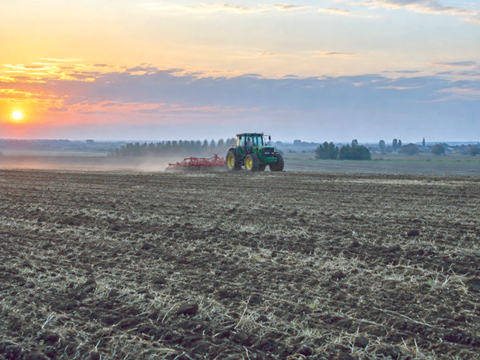
The immediate priority is to complete winter sowing as planned, the agriculture minister explained. Winter crops traditionally account for most of the country’s grain harvest, including about two-thirds of its wheat production.
‘Given the difficult situation facing agricultural producers, we have already adopted and are working on a number of additional measures to support farmers’ finances. Winter sowing has now been completed on 70% of the planned area,’ she said
The official forecast for Russia’s grain harvest this year is 140 mln tonnes. In 2025, the harvest amounted to 141.2 mln tonnes in clean weight, including 91.1 mln tonnes of wheat.
Ahead of state grain purchases, the Russian government will allocate more than RUB 5 bln in additional funding to maintain the state intervention fund, Prime Minister Mikhail Mishustin said at the latest government meeting (See Nezavisimaya Gazeta, October 15, 2026.). According to Mishustin, the mechanism of procurement and commodity interventions in the grain market is designed to maintain farm profitability at no less than 10%. ‘It helps strengthen food security, smooth out price fluctuations in the market and ensure that the country has the necessary reserves,’ he said
According to the United Grain Company (UGC), the agent responsible for managing grain held in the state fund, the fund currently contains 3.7 mln tonnes. Most of its stocks are stored in Siberia and the Volga region, with additional reserves distributed across the Ural, Central and Southern federal districts. Food-grade wheat accounts for more than 3.6 mln tonnes of the stored grain. The reserves are held at 147 specialised facilities in 22 regions
Oksana Lut has said that the new procurement interventions could begin in late October, with purchases expected to total 3 mln tonnes. UGC has already selected more than 50 grain elevators, with combined capacity of 1.5 mln tonnes. A further selection process for companies to store grain from the state fund has been announced. The interventions are conducted through the National Mercantile Exchange.
Winter wheat acreage is declining across almost the entire country. In Rostov Region, for example, some farms reduced the area sown by 12–20% in October 2026 compared with the same period in 2025. The decline reflects low grain prices alongside rising costs for fertiliser, fuel and other inputs, Mikhail Sidyakin, chairman of the People’s Farmer Association of Rostov Region, told RBC TV South. ‘Many farms are simply leaving land fallow to cut costs. Others are considering spring sowing of more specialised crops,’ Sidyakin said.
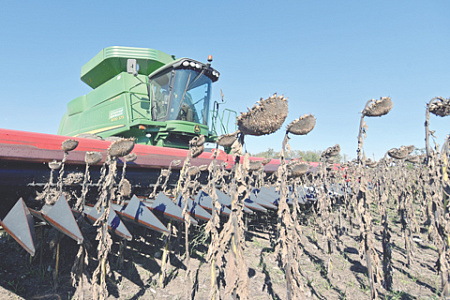
Oilseed crops have become almost the only profitable segment of crop production, experts believe. Russia’s oilseed harvest could reach a record 35–36.4 mln tonnes in 2026, substantially exceeding the 2025 level. The profitability of oilseeds contrasts sharply with losses on grain crops. In July and August 2026, sunflower margins stood at RUB 17,000–21,000 per tonne. That is 2–2.5 times higher than wheat margins in their best years, according to experts at Zerno Online. However, a record harvest is likely to push domestic prices down.
Sown areas in Russia are shrinking overall, and wheat acreage in particular is contracting. In August, Rosstat revised its data on the reduction in sown areas in 2026 (See Nezavisimaya Gazeta, August 19, 2026.). The revised figures show that the total area sown with agricultural crops across all types of farms, including agricultural companies, commercial farms and household plots, stood at 77.3 mln hectares in 2026, according to the spring survey, compared with the final figure of 79.5 mln hectares for 2025. This represents a year-on-year decline of 2.8%.
The area sown with grain and leguminous crops fell to 41.1 mln hectares from 43.7 mln hectares a year earlier. Total wheat acreage declined to 25.7 mln hectares from 26.9 mln hectares. Rye acreage fell from 451,000 to 379,000 hectares. Barley acreage increased to 6.92 mln hectares from 6.65 mln hectares. Rosstat’s figures do not include statistics for the new regions. Sugar beet was sown on 1.15 mln hectares, compared with 1.2 mln hectares a year earlier. Potato acreage declined to 968,000 hectares from 993,000 hectares
Grain accounted for 27% of the value of Russian agricultural exports in 2025, down from 37% in 2024. In previous years, wheat had accounted for about 80% of Russia’s grain exports
The share of vegetable oils and fats in agricultural exports rose to 22% last year from 20%. The share of food processing products also increased, from 12% to 14%, while fish and seafood rose from 11% to 14%. Agriculture Minister Oksana Lut has previously said that Russia aims to reduce the share of grain products in agricultural exports to 25% by 2030. Russian exports are expected to focus increasingly on products with higher added value