The scope of directive management of formally non-state companies in Russia’s oil industry is expanding. Before the start of the special military operation (SMO), officials set an acceptable range for fluctuations in domestic petrol and diesel prices. Later, requirements emerged for the volume of petroleum-product supplies to the regions. Now officials are trying to control the creation of reserve production capacity at industrial facilities. Manual, directive management of the fuel sector could be attributed to the consequences of the SMO. But in reality, throughout the post-Soviet history of Russia, fully fledged market mechanisms have never been created that could have given oil companies a financial incentive to supply the domestic fuel market.
In the turbulent 1990s, the Russian authorities supported the domestic fuel market through so-called balance targets, mandatory requirements for supplying specified volumes of particular petroleum products. Without fulfilling these targets, oil companies could not export their products.
In the 2000s, the Russian authorities tried to establish economic incentives that would encourage oil companies to supply the domestic market. Government spending on these incentives has amounted to hundreds of billions of roubles. In some years, state payments to oil companies exceeded half of the entire budget deficit. Yet none of these economic incentives managed to guarantee sufficient fuel supplies to meet domestic demand.
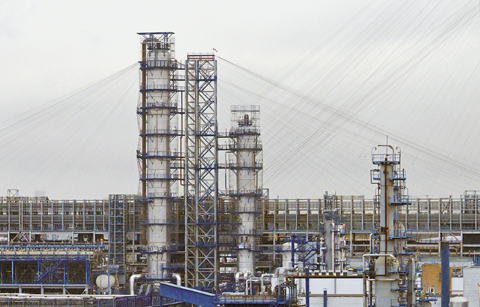
With the start of Ukrainian attacks on Russia’s fuel infrastructure, the authorities were forced to return to the almost forgotten balance targets of the 1990s. The state also tightened administrative regulation of scheduled and unscheduled maintenance at oil refineries. A new element of regulation is now being discussed: expanding reserve production capacity for fuel.
‘The Energy Ministry reported on the implementation of previously issued instructions. In particular, several additional units have already been commissioned at a number of refineries, which has made it possible to increase petroleum-product output,’ the Russian government said after a meeting on Monday, September 14.
Officials confirmed that ‘fuel supplies to regional markets where local disruptions have been recorded continue to be adjusted’. On a manual basis, work has been organised to ensure supplies to Yekaterinburg, Chelyabinsk, Arkhangelsk, Tver and Belgorod regions, as well as Perm and Krasnodar territories. The situation in St Petersburg and the Leningrad region was also reviewed.
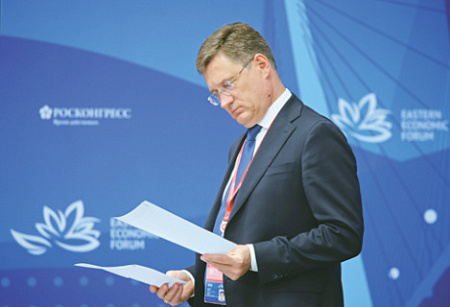
Deputy Prime Minister Alexander Novak holds regular government meetings attended by Energy Minister Sergei Tsivilev, representatives of the Federation Council and the State Duma, the Agriculture Ministry, the Federal Antimonopoly Service (FAS), the Transport Ministry, regional governors and industry companies. It was Novak who announced the balance targets for oil companies this summer.
‘Instructions have been issued within the framework of the balance targets established for diesel supplies to specific regions, specific oil depots and specific large agricultural holdings, as well as other agricultural producers,’ Deputy Prime Minister Novak explained in July 2026. At the time, priorities were also announced for supplying fuel to the vehicles of major retail chains in order to prevent food prices from rising.
On Monday, the Federal Antimonopoly Service reported that it had opened 55 cases over violations of competition law.
‘Eighty-three warnings were issued, 51 of which have been complied with. It was noted that vertically integrated oil companies are keeping retail fuel prices within previously agreed parameters close to the inflation rate,’ the government said. Officials announced that they were ‘continuing to develop and implement agreements between independent refineries and petrol stations, on the one hand, and the Energy Ministry and FAS, on the other, aimed at maintaining an acceptable price level’.
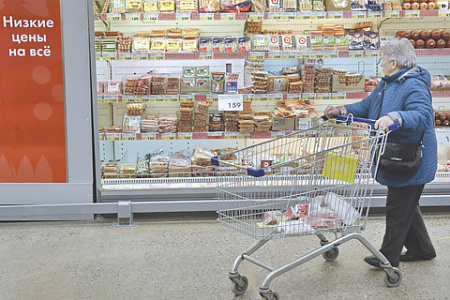
The issue of ‘maintaining an acceptable price level’ is far from trivial. It is no secret that amid the continuing fuel shortage, petrol is sometimes being offered at prices well above RUB 100 per litre.
Despite the arrival of batches of imported petrol in Russia, there is still no clear prospect of a rapid end to the fuel shortage. The authorities in the Leningrad region, for example, are so far only promising to establish limited petrol supplies for local consumers in the future.
‘Our goal is to meet petrol demand at least within limits of 20 to 30 litres a day,’ Leningrad Region Governor Alexander Drozdenko said on Monday, September 14. ‘We can see light at the end of the tunnel: we expect new supplies to reach the region by the beginning of October, new logistics chains to be established and, of course, the refineries to resume operations after maintenance,’ the governor said.
Drozdenko also said that members of his own family were experiencing petrol shortages.
‘My younger daughter could not come to see me today because she couldn’t refuel. And my older daughter spent more than two hours in a queue to get here,’ the governor said. He also announced that authorities were considering introducing restrictions allowing cars to refuel every other day depending on whether their registration number is even or odd.
‘Many vertically integrated companies have now introduced fuel limits. And these limits are, of course, creating queues at petrol stations. We all understand that this is a consequence of the recent attacks by enemy drones on major oil refineries, including Kirishinefteorgsintez, and the resulting decline in the production of AI-92 and AI-95 petrol,’ the governor said. ‘By the beginning of October, we must resolve this situation together with the major oil companies, our partners,’ he promised.
According to reports in the local press, imported petroleum products arrived at two Baltic sea transshipment terminals in August. Together, they handled around 140,000 tonnes of foreign petroleum products. In total, just over 300,000 tonnes of fuel were imported through Russian ports in August.
For now, Deputy Prime Minister Novak has instructed the relevant agencies to continue monitoring the domestic fuel market.
‘At the same time, it is necessary to assess more precisely the emerging balance between the production and consumption of petroleum products in all regions, promptly propose specific mechanisms for resolving emerging issues, and ensure a deeper and more detailed regional analysis of the state of refuelling infrastructure,’ officials said.